
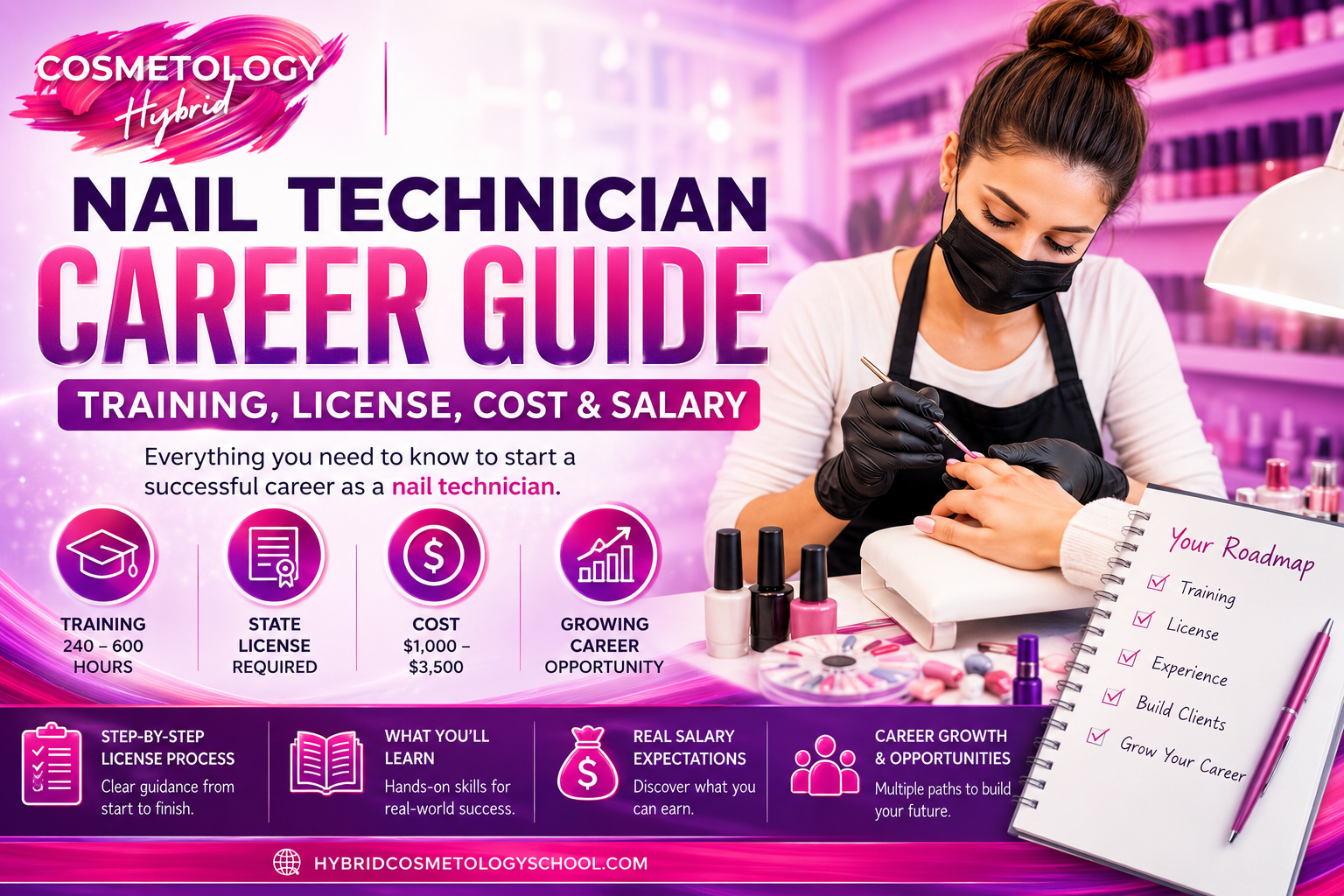
What Is a Nail Technician and How Do You Become One?
A nail technician is a licensed beauty professional trained to perform manicures, pedicures, and nail enhancements such as gel, acrylic, and dip powder. Becoming one usually takes two to six months, depending on your state’s required training hours, and it ends with a state board license you carry for the rest of your career.
I’ve spent years around cosmetology programs, and the question I hear most from people considering this path isn’t “is it a good job,” it’s “what does the actual process look like, start to finish.” Fair question. Most articles online either oversell the glamour or bury you in vague generalities. Here’s the version with real numbers attached.
If you’ve already decided you want hands-on work, a flexible schedule, and a license you can use almost anywhere in the country, you’re in the right place. Let’s walk through exactly what becoming a nail technician involves, what it costs, what you’ll earn once you’re working, and whether the field is actually worth your time in 2026.
What Does a Nail Technician Do Day to Day?
A nail technician’s core job is shaping, cleaning, and decorating nails, but the daily reality covers far more ground than that single sentence suggests. You’ll perform basic manicures and pedicures, apply gel polish and acrylic or dip powder enhancements, repair broken or damaged nails, and in many salons, create custom nail art using brushes, stamps, or hand painted designs. Sanitation runs underneath every single one of those tasks. Every tool gets disinfected between clients, every station follows health board rules, and a technician who treats that step as optional usually doesn’t keep their license for long.
There’s a service side to the job too that catches new technicians off guard. You’re talking to people for thirty to ninety minutes at a stretch, several times a day, which means customer service skills matter almost as much as your technique. A client who’s stressed before a job interview wants something different from one celebrating a birthday, and reading that difference quickly is part of what separates a technician who builds repeat clients from one who doesn’t.
In my experience watching new graduates enter the field, the ones who succeed fastest aren’t necessarily the most artistically gifted. They’re the ones who treat sanitation seriously and remember that a returning client is worth more than a flashy one-time design.
| Task | How Often | Skill Level |
|---|---|---|
| Manicure and pedicure | Daily | Beginner |
| Gel or acrylic application | Daily to weekly | Intermediate |
| Custom nail art | Varies by salon | Intermediate to advanced |
| Tool sterilization | Between every client | Beginner, non negotiable |
| Client consultation | Every appointment | Soft skill |
How Long Does Nail Technician Training Actually Take?
Training length depends almost entirely on your state’s required practical hours, and that number swings more than people expect. In the United States, a standalone nail technician program typically requires somewhere between 240 and 600 hours of training before you’re eligible to take the licensing exam. That translates into roughly two months of intensive full time study on the low end, or up to six months if you’re attending part time evening classes around a job.
Training Hours by State
Florida sits near the lower end at 240 hours. Other states push closer to 600. There isn’t a single national standard, which is exactly why checking your specific state board’s website before enrolling matters more than trusting a school’s marketing page. Schools sometimes advertise outdated hour requirements, and you don’t want to discover the gap after you’ve already paid tuition.
Full Time vs Part Time Schedules
Full time programs usually run five days a week and finish fastest, which suits someone who can step away from other work temporarily. Part time evening or weekend programs stretch the same hours across a longer calendar but let you keep earning income elsewhere while you train. Neither path is objectively better. It depends on what your finances and schedule can actually absorb without burning you out halfway through.
What Are the Nail Technician License Requirements?
Every state sets its own bar, but the shape of the license requirements stay consistent almost everywhere. You need to be at least 16 to 18 years old depending on the state, complete your training hours at an accredited school, and pass both a written and a practical exam administered by your state cosmetology board.
The Written Exam
The written portion tests sanitation rules, nail anatomy, chemical safety, and common nail disorders. It’s multiple choice in most states, and the pass threshold typically sits around 75 percent. Studying the sanitation section especially closely pays off, since it tends to make up a large share of the questions.
The Practical Exam
The practical exam is where nerves take over for a lot of candidates. You’ll perform an actual manicure or enhancement service on a live model or mannequin hand while an examiner scores your technique, your timing, and your sanitation habits in real time. One thing I tell people preparing for this part: practice under a timer at home, with someone watching you, well before exam day. The exam environment itself adds pressure that a quiet solo practice session simply doesn’t replicate, and that gap trips up more candidates than a lack of skill ever does.
How Much Does It Cost to Become a Nail Technician?
Tuition for a standalone nail technician course generally runs between $1,000 and $3,500 in the United States, well below the $10,000 to $20,000 price tag of a full cosmetology license. But tuition is rarely the full cost, and that’s the part people underestimate.
Beyond tuition, expect a state licensing exam fee of $50 to $150, a starter kit of files, brushes, and polish running $200 to $500 if it isn’t bundled into your program, and optional liability insurance around $100 to $200 a year once you’re working. Renewal fees show up every one to two years after licensing too, so budget for that recurring cost rather than treating your license as a one time purchase.
One case worth mentioning: a graduate I followed through her program budgeted only for tuition and the exam fee, then got surprised by a $300 kit requirement her school hadn’t clearly disclosed upfront. She finished fine, but she told me afterward that calling the school’s admissions office directly and asking for an itemized cost list before enrolling would have saved her a stressful month of scrambling for extra cash.
How Much Do Nail Technicians Earn?
Pay varies by location, salon type, and how built up your client base is, but the general range looks like this once you account for tips and commission.
| Experience Level | Hourly Range | Annual Range |
|---|---|---|
| Entry level, 0 to 1 year | $12 to $16 plus tips | $22,000 to $30,000 |
| Mid level, 2 to 4 years | $16 to $22 plus tips | $32,000 to $42,000 |
| Established, 5 plus years | $25 or more plus tips | $45,000 to $65,000 plus |
Most salons pay through a mix of hourly base, commission on services, and tips, with commission often landing between 40 and 60 percent of the service price. That structure means your income climbs fast once you’ve built a loyal client base who books you specifically rather than whoever’s available.
Is Nail Technician a Good Career Choice?
Demand for nail technicians continues climbing because nail services are recurring purchases, not one time visits. Clients return every two to four weeks for fills, polish changes, or fresh sets, which gives the field a built in repeat business model that a lot of other service jobs simply don’t have.
Job boards in nearly every city show open nail technician positions, and salon owners regularly report difficulty finding enough licensed staff, particularly technicians comfortable with newer techniques like dip powder and detailed nail art. Beyond salon employment, the path toward booth rental or eventually opening an independent salon stays genuinely open once you’ve built enough clients to support yourself without relying on walk in traffic. That lower barrier to going independent is one of the field’s real advantages compared to other licensed trades.
Frequently Asked Questions
How long does it take to become a nail technician?
Most people finish training and pass their license in two to six months, depending on their state’s required hours and whether they study full time or part time.
Do you need a high school diploma to become a nail technician?
Most states require one or a GED, though a handful allow enrollment without it as long as you meet the minimum age requirement.
How much does nail technician school cost?
Tuition typically runs $1,000 to $3,500, with additional costs for the exam fee, starter kit, and optional insurance.
Can a nail technician work for themselves?
Yes. Booth rental and independent salon ownership are both common paths once a technician has built a steady client base.
Is the nail technician practical exam hard?
It’s manageable with preparation. The main challenge is performing under timed, observed conditions, so practicing that way beforehand helps more than studying alone.
Start Your Nail Technician Career Today
If you’ve read this far, you already know what the path actually involves: the hours, the costs, the exam, and the realistic pay you can expect once you’re working. Hybrid Cosmetology School has guided students through exactly this process, from enrollment through their first licensed client, and the team there can walk you through your specific state’s requirements before you commit a single dollar. Reach out and ask about current program start dates. The sooner you start the training hours, the sooner you’re standing in front of your first paying client with a license in hand.