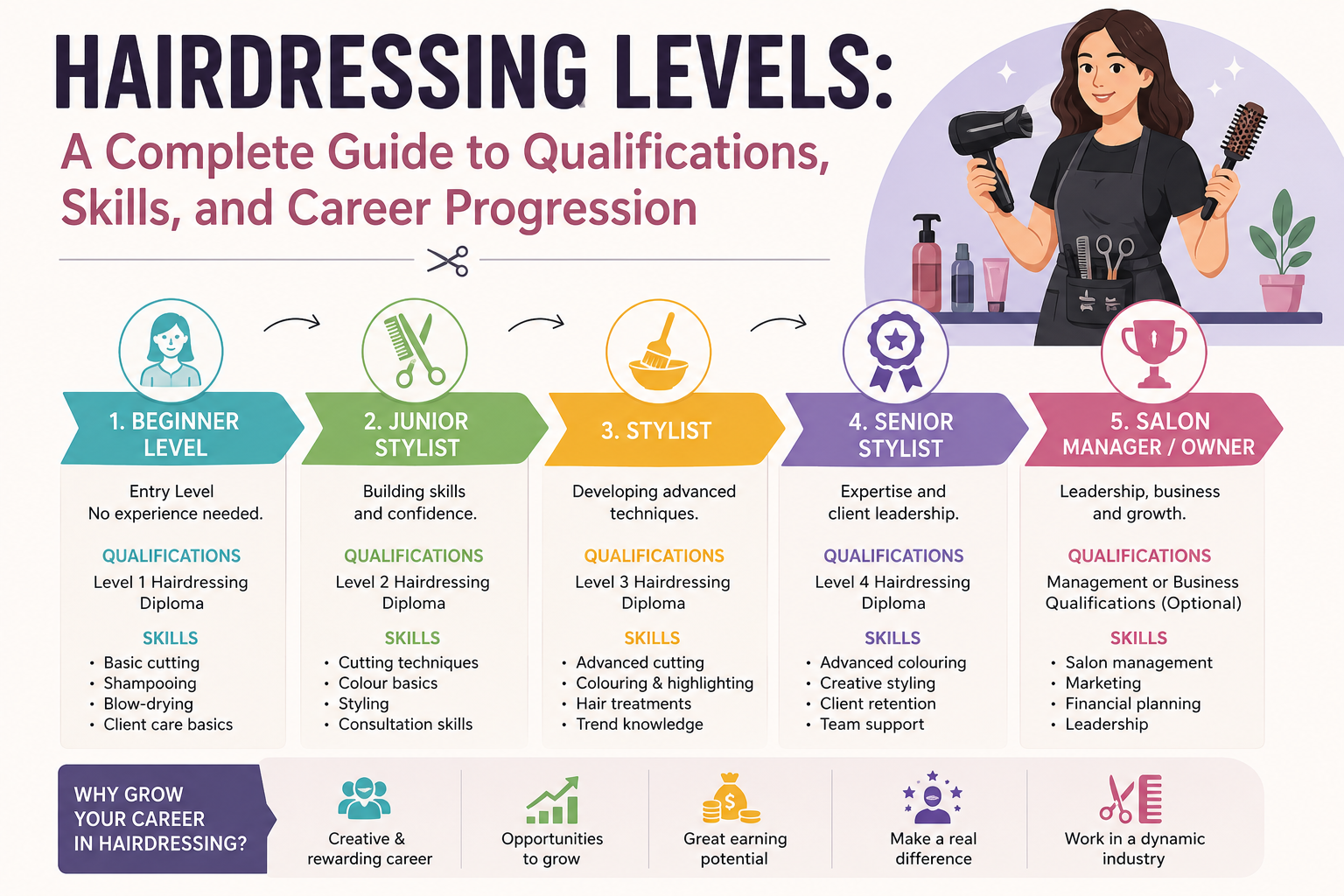
Hairdressing levels help people learn hairdressing step by step. Each level teaches new skills and gives you more confidence. Whether you are just starting or want to become a salon manager or teacher, understanding hairdressing levels will help you choose the right qualification and career path.
This guide explains the different hairdressing levels, what you learn at each stage, the jobs you can get, and how to choose the best level for your future.
What Are Hairdressing Levels?
Hairdressing levels are different stages of training. Each level teaches both practical and theory skills. Training providers arrange these levels from beginner to advanced, so students can improve their skills step by step.
At every level, students learn salon work, customer service, health and safety, and professional hairdressing skills.
The names of the qualifications may be different in some countries, but the learning process is almost the same.
Why Are Hairdressing Levels Important?
Studying the correct hairdressing level offers several benefits:
- Builds skills step by step.
- Improves confidence through practical experience.
- Increases employment opportunities.
- Meets industry qualification standards.
- Creates pathways to advanced education.
- Helps professionals specialize in different services.
Employers often value recognized qualifications because they demonstrate technical ability and commitment to professional development.
Hairdressing Level 1: The Foundation
Level 1 is made for beginners who have little or no experience.
It introduces you to the salon environment and teaches basic hairdressing skills. You also learn about hygiene, safety, and professional behavior.
Skills Learned at Level 1
Students typically learn:
- Shampooing and conditioning hair
- Basic blow-drying
- Salon health and safety
- Customer care
- Reception duties
- Preparing workstations
- Basic styling techniques
- Introduction to hair products
Most practical work is completed under supervision, allowing students to gain confidence before moving to more advanced services.
Career Opportunities
After completing Level 1, learners may work as:
- Salon assistant
- Junior hairdresser
- Apprentice
- Reception assistant in salons
Many students continue directly to Level 2.
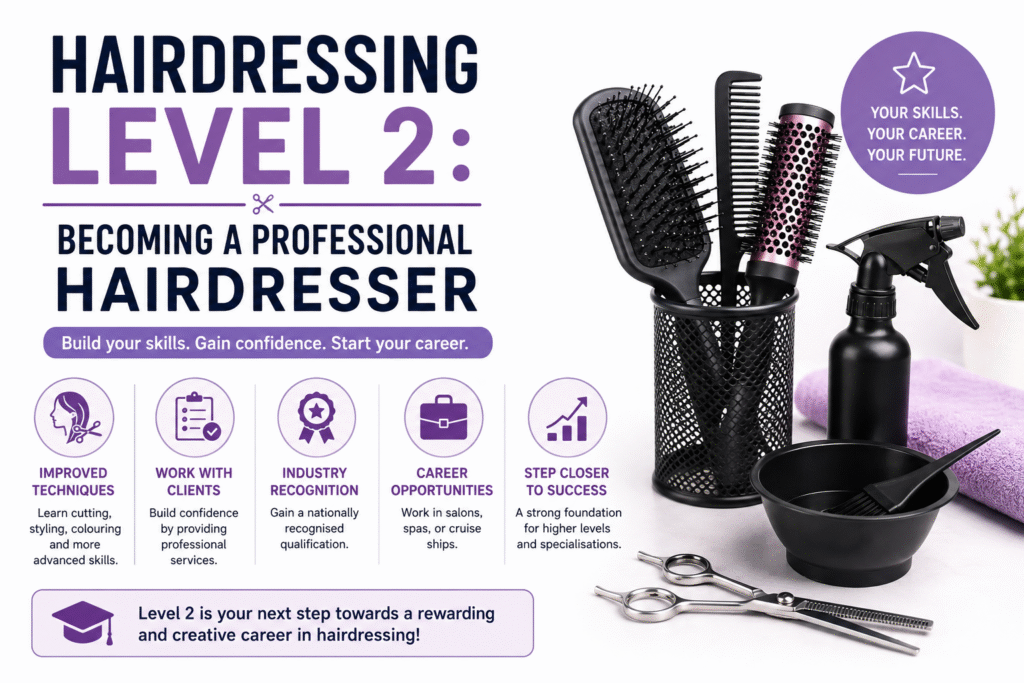
Hairdressing Level 2: Becoming a Professional Hairdresser
Level 2 is considered the entry-level professional qualification.
Students begin performing real salon services while developing stronger technical skills.
Skills Covered
At this stage, learners usually study:
- Hair cutting techniques
- Blow drying and styling
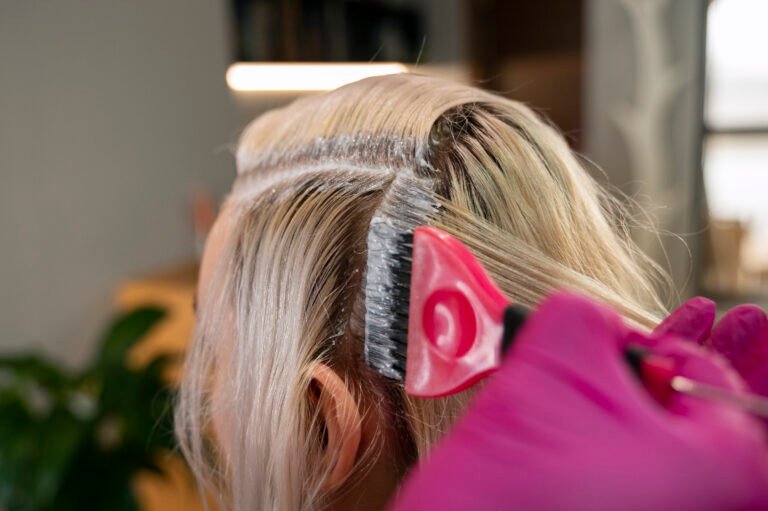
- Hair colouring
- Basic highlighting
- Perming
- Client consultation
- Retail recommendations
- Infection control
- Professional communication
Practical training becomes much more important, with students working on real clients under supervision.
Career Options
After completing Level 2, graduates may become:
- Junior stylist
- Hairdresser
- Salon stylist
- Mobile hairdresser
- Freelance beginner stylist
Many salons consider Level 2 sufficient for entry-level employment.
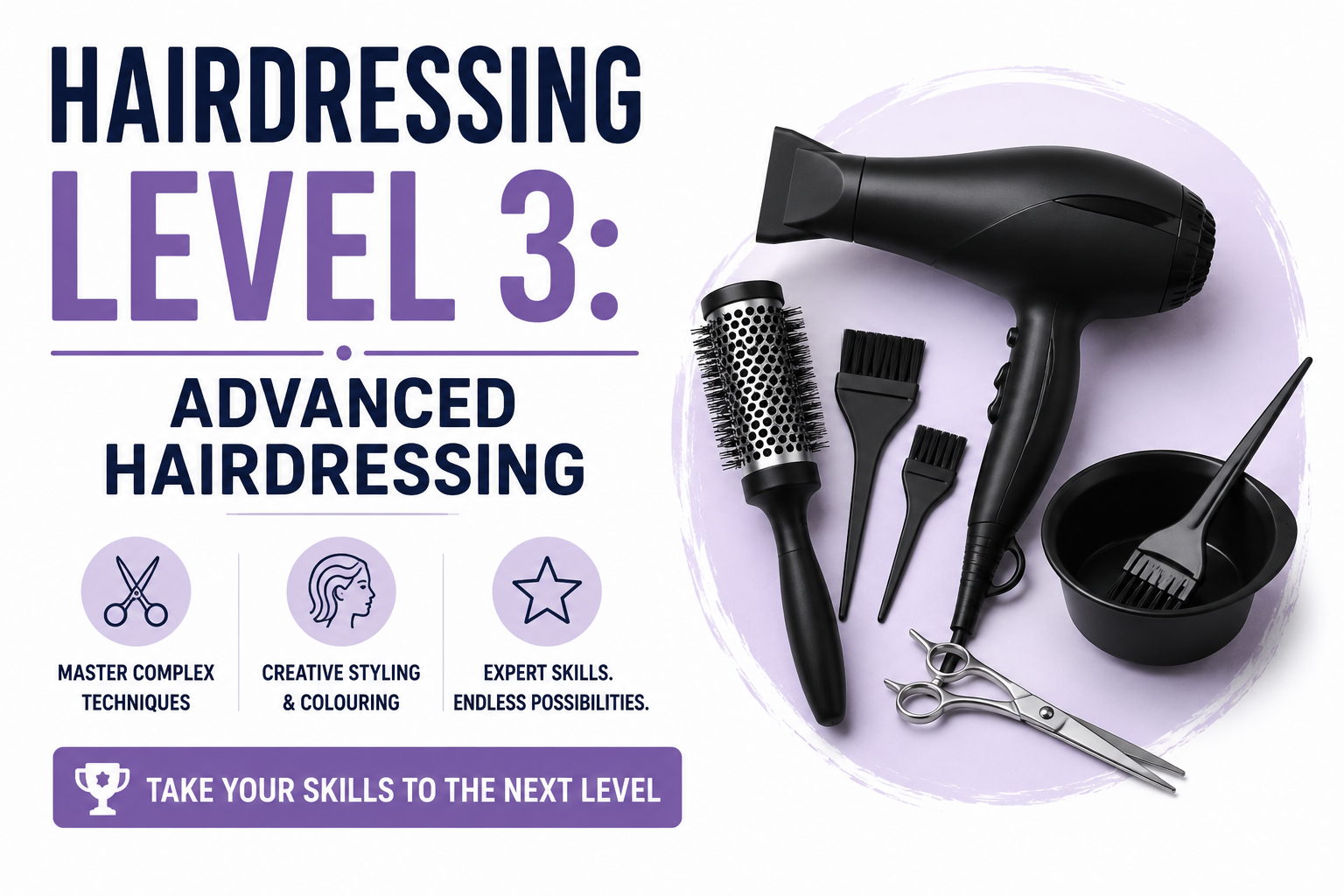
Hairdressing Level 3: Advanced Hairdressing
Level 3 develops advanced technical skills and prepares professionals for senior roles.
Hairdressers become more independent and perform complex services confidently.
Advanced Skills Include
Students learn:
- Creative hair cutting
- Colour correction
- Advanced colouring techniques
- Fashion styling
- Bridal hair
- Long hair design
- Creative finishing
- Hair analysis
- Corrective services
- Advanced consultation
Students also improve problem-solving skills by handling different hair types and challenging client requests.
Career Opportunities
Completing Level 3 can lead to careers such as:
- Senior stylist
- Colour specialist
- Bridal hairstylist
- Salon supervisor
- Freelance professional
- Platform artist
Many professionals choose to specialize after reaching this level.
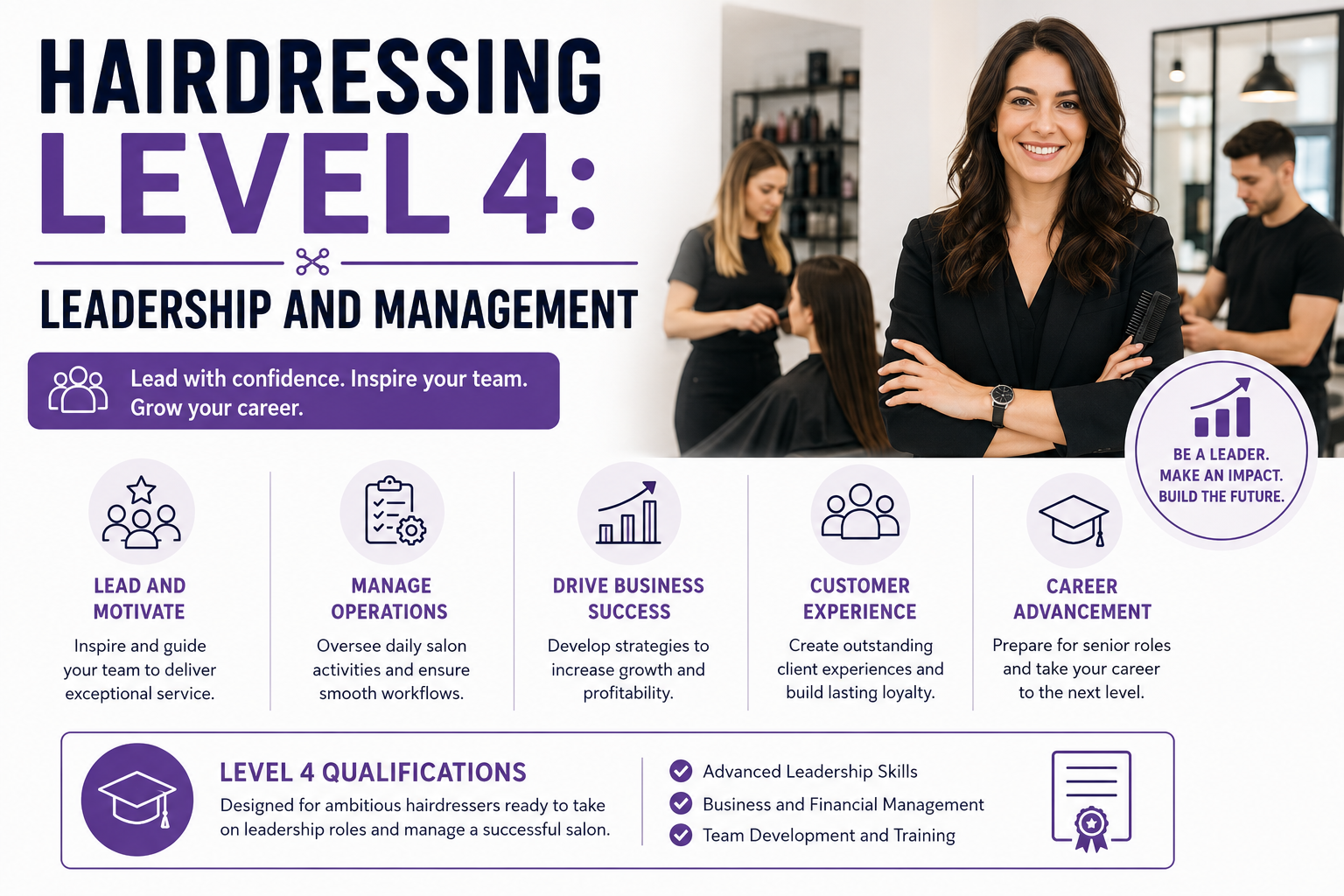
Hairdressing Level 4: Leadership and Management
Level 4 focuses less on basic technical work and more on leadership, business, and advanced professional practice.
Typical subjects include:
- Salon management
- Team leadership
- Staff training
- Business planning
- Marketing
- Financial management
- Customer relationship management
- Advanced consultation
This level is ideal for professionals planning to manage or own a salon.
Career Paths
Graduates may become:
- Salon manager
- Assistant manager
- Salon owner
- Education coordinator
- Business consultant
Hairdressing Level 5 and Higher
Some countries offer higher-level vocational or professional qualifications.
These courses often prepare experienced professionals for education or senior management positions.
Topics may include:
- Teaching hairdressing
- Assessing student performance
- Business development
- Advanced salon operations
- Industry research
- Entrepreneurship
- Professional mentoring
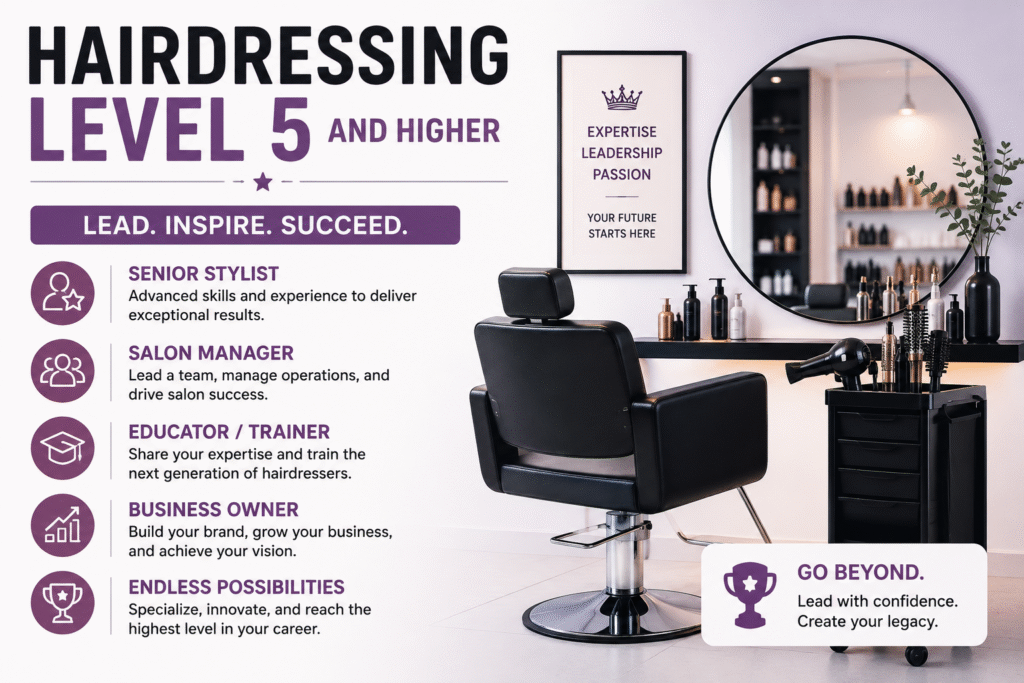
These qualifications are particularly valuable for those who want long-term careers in education or salon ownership.
Skills Developed Across All Hairdressing Levels
As students progress, they continually improve both technical and personal skills.
Technical Skills
- Hair cutting
- Hair colouring
- Hair styling
- Chemical treatments
- Product knowledge
- Hair consultation
- Scalp care
- Finishing techniques
Soft Skills
Successful hairdressers also develop:
- Communication
- Time management
- Customer service
- Creativity
- Problem-solving
- Teamwork
- Professional ethics
- Confidence
These soft skills often make the biggest difference in building loyal clients.
How Long Does It Take to Complete Hairdressing Levels?
Training time depends on the learning format.
Typical durations are:
| Hairdressing Level | Estimated Duration |
| Level 1 | 3–6 months |
| Level 2 | 9–12 months |
| Level 3 | 12–18 months |
| Level 4 | Around 1 year |
| Level 5 | Varies by institution |
Part-time learners may take longer, while apprentices often complete qualifications while working.
Choosing the Right Hairdressing Level
Before enrolling, consider several factors.
Your Experience
Complete beginners should usually start with Level 1 or Level 2, depending on course requirements.
Career Goals
Think about your long-term plans.
If you want to become:
- A salon stylist, Level 2 may be enough.
- A senior stylist, continue to Level 3.
- A salon manager or owner, aim for Level 4.
- A trainer or educator, consider Level 5 or teaching qualifications.
Learning Style
Many colleges offer:
- Full-time courses
- Part-time classes
- Apprenticeships
- Online theory with practical training
Choose the format that fits your schedule.
Benefits of Completing Higher Hairdressing Levels
Advancing through the different hairdressing levels provides many advantages.
These include:
- Higher earning potential
- Better employment opportunities
- Greater confidence
- More technical expertise
- Ability to specialize
- Leadership opportunities
- Business ownership potential
- Professional recognition
Continuous learning also helps professionals stay updated with new trends and techniques.
Common Challenges During Hairdressing Training
Learning hairdressing takes practice and patience.
Students often face:
- Building speed
- Developing cutting accuracy
- Understanding colour theory
- Managing client expectations
- Standing for long periods
- Practicing consistently
Regular salon experience helps overcome these challenges.
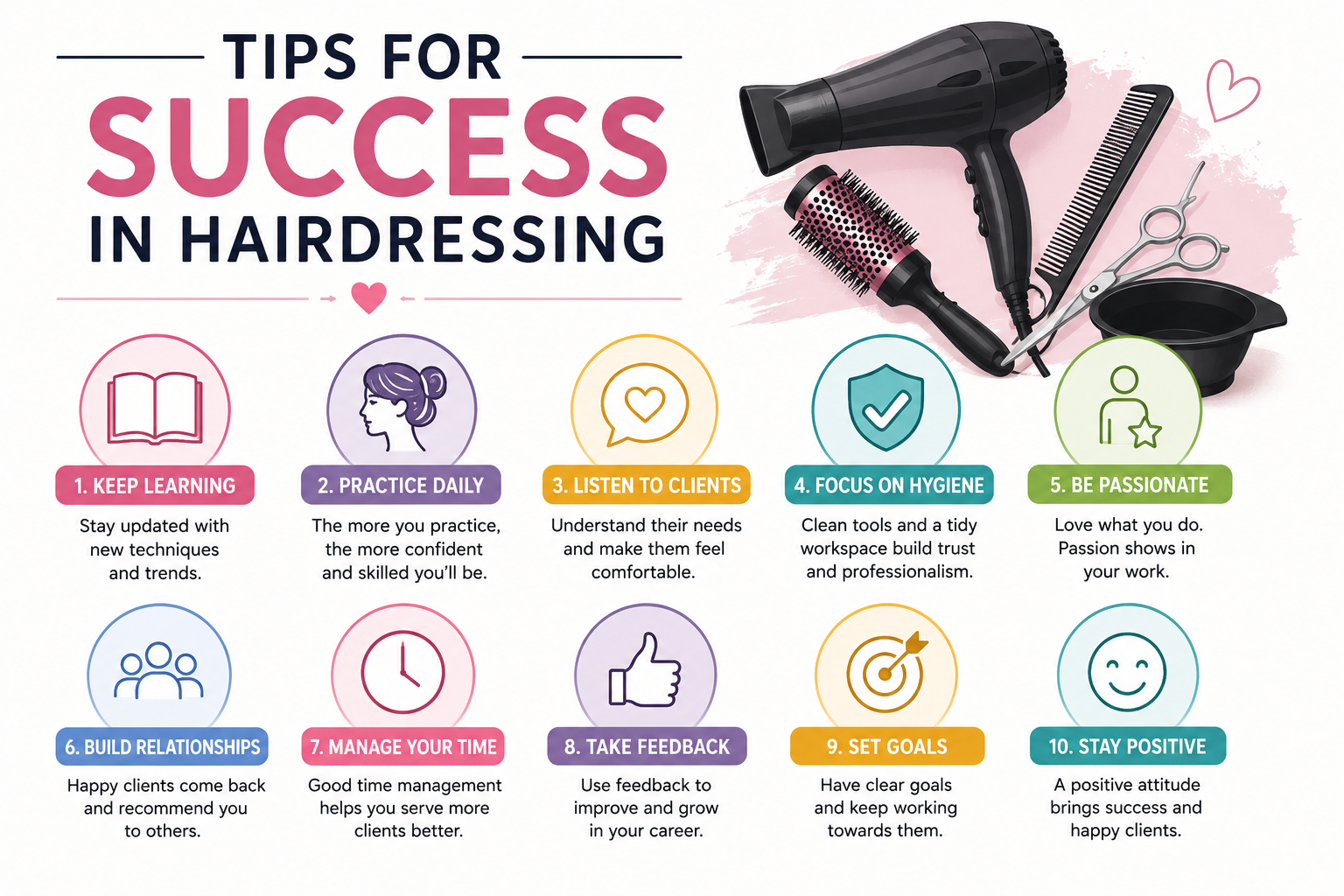
Tips for Success in Hairdressing
To succeed in the industry:
- Practice every day.
- Learn from experienced stylists.
- Build excellent communication skills.
- Stay updated with new trends.
- Keep your tools clean.
- Create a professional portfolio.
- Attend workshops and seminars.
- Continue advancing through higher hairdressing levels.
Professional growth never stops in the beauty industry.
Frequently Asked Questions
What are hairdressing levels?
Hairdressing levels are professional qualifications that teach hairdressing skills step by step. They start with basic training and continue to advanced salon and management skills.
Which hairdressing level should beginners choose?
Most beginners start with Level 1 or Level 2, depending on their experience and the course requirements.
Is Level 2 enough to become a hairdresser?
Yes. Level 2 is widely accepted as the basic professional qualification for working as a hairdresser in many salons.
What comes after Level 3 hairdressing?
After Level 3, many people continue to Level 4 to learn salon management or Level 5 if they want to become a trainer, teacher, or business owner.
Do all countries use the same hairdressing levels?
No. Different countries may have different qualification names, but most follow a similar learning path from beginner to advanced levels.
Conclusion
Understanding hairdressing levels helps you choose the right learning path and build a successful career in the beauty industry. Each level introduces new technical skills, greater responsibility, and better career opportunities. Whether your goal is to become a skilled stylist, colour specialist, salon manager, or educator, progressing through the appropriate qualifications provides the knowledge and confidence needed for long-term success. With dedication, continuous practice, and ongoing professional development, hairdressing can become a rewarding and creative career with excellent growth potential.