An online cosmetology school lets you study theory from home. But no state licenses a 100% remote cosmetologist. You’ll still need hands-on hours at a physical location before you can sit for your board exam.
That’s why real online cosmetology programs are actually hybrid. At Hybrid Cosmetology School, you study beauty theory online, then bring it to life with hands-on training at our Georgia campus.
What “Online Cosmetology School” Actually Means?
Cosmetology is a licensed, hands-on trade. Cutting hair, applying chemical treatments, and doing nail services can’t be taught through a screen alone.
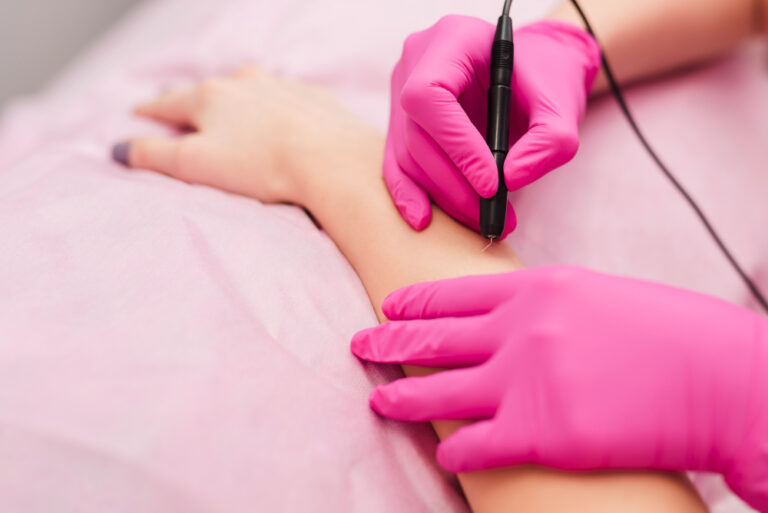
Because of this, state boards require documented practical hours. These hours must happen in person, under supervision.
A credible hybrid cosmetology program will typically include:
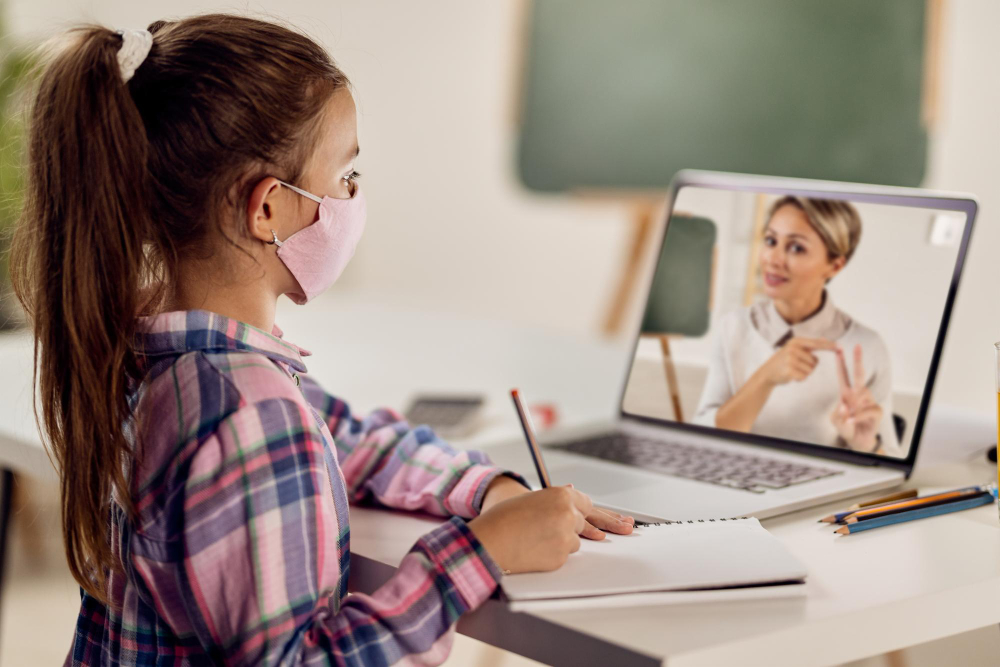
- Self-paced or live-streamed theory lectures
- Digital textbooks and quizzes
- Scheduled in-person lab or clinic days
- Supervised practice on mannequins, then live models
- Faculty check-ins and skill evaluations
If a program promises zero in-person requirements, that’s a red flag. No state currently allows this for a cosmetology license.
Which States Allow Online Coursework?
Rules vary widely by state. Some states cap how many hours can be completed online. Others are stricter.
New York allows up to 1,000 hours of online instruction for cosmetology programs, while Pennsylvania permits up to 1,250 hours. Florida, Texas, and California permit online theory courses, but practical training must happen in person at an approved school or salon.
A few states go further. Arizona, Colorado, and Idaho allow both theory and practical components to be completed online or through hybrid formats, depending on the school’s approval.
Always confirm the rule for your state. Your program must match your state board’s approved list of online hours.
How Many Training Hours Do You Need?
Total required hours differ by state, not by school. Requirements range from 1,000 hours in states like New York and Massachusetts up to 1,600 hours in others.

Here’s a general breakdown:
| Hour Requirement | Example States |
|---|---|
| 1,000 hours | New York, Massachusetts |
| 1,200 hours | Florida |
| 1,500 hours | California, Texas, Illinois, Georgia |
| 1,600+ hours | Some higher-requirement states |
The most widely used standard across roughly 25 states is 1,500 hours. A handful of states, including Iowa, Nebraska, and South Dakota, require as many as 2,100 hours.
Your online-eligible hours are always a portion of this larger total, not the entire program.
What You’ll Actually Study?
Cosmetology training covers far more than haircuts. Programs cover haircutting, coloring, chemical treatments, scalp treatments, skin care, nail care, sanitation, state law, and salon management.
Expect two learning tracks running together:
- Theory (online): anatomy, chemistry, sanitation rules, state law
- Practical (in-person): cutting, coloring, styling, treatments on models
At Hybrid Cosmetology School, practical training happens on both mannequins and live models, building toward real client services with expert instructors supervising every step.
How Licensing Works After Graduation?
Finishing your hours is only step one. After training, you must pass a state-administered licensing exam, typically developed by the National-Interstate Council of State Boards of Cosmetology or PSI Services.
Most exams have two parts:
- Written theory exam: 100–120 multiple-choice questions on sanitation, safety, chemistry, hair science, and state law
- Practical exam: a hands-on skills test, usually done in person
Some states have replaced the practical exam with school-based competency checks instead.
Why Accreditation Matters?
Before enrolling anywhere, verify the school’s accreditation status. Many reputable hybrid programs are approved by the National Accrediting Commission of Career Arts and Sciences (NACCAS).
Unaccredited or unapproved programs can leave you unable to sit for your state exam. Always check your state board’s approved school list before paying tuition.
Questions worth asking any online cosmetology school:
- Is this program approved by my state board?
- How many hours can be completed online versus in person?
- Where are the required practical hours completed?
- What is the total program cost, including kit and exam fees?
- What is the school’s exam pass rate?
Is Hybrid Cosmetology School Right for You?
Hybrid programs work well if you need schedule flexibility for theory work. They’re less ideal if you can’t commit to regular in-person lab days.
Our hybrid model lets you master beauty theory on your own schedule, then join us on campus for immersive, hands-on training with real clients and expert instructors. It’s not a fully remote path to licensure, and no legitimate program is.
Working adults, career-changers, and busy parents often benefit most from this format. Studying at home frees up your daytime hours for work or family.
Bottom Line
There’s no such thing as a fully remote cosmetology license. But a hybrid program can meaningfully cut down your time in a physical classroom, without cutting corners on your training.
If you’re ready to see how our hybrid model fits your life, explore our programs or request a free consultation.
An online cosmetology school lets you study theory from home. But no state licenses a 100% remote cosmetologist. You’ll still need hands-on hours at a physical location before you can sit for your board exam.
That’s why almost every “online” cosmetology program is actually hybrid. You take lecture and theory coursework on your own schedule. Then you complete supervised practical training in a salon, lab, or clinic setting.
What “Online Cosmetology School” Actually Means?
Cosmetology is a licensed, hands-on trade. Cutting hair, applying chemical treatments, and doing nail services can’t be taught through a screen alone.
Because of this, state boards require documented practical hours. These hours must happen in person, under supervision.
A credible online cosmetology program will typically include:
- Self-paced or live-streamed theory lectures
- Digital textbooks and quizzes
- Scheduled in-person lab or clinic days
- Supervised practice on mannequins, then live models
- Faculty check-ins and skill evaluations
If a program promises zero in-person requirements, that’s a red flag. No state currently allows this for a cosmetology license.
Which States Allow Online Coursework?
Rules vary widely by state. Some states cap how many hours can be completed online. Others are stricter.
New York allows up to 1,000 hours of online instruction for cosmetology programs, while Pennsylvania permits up to 1,250 hours. Florida, Texas, and California permit online theory courses, but practical training must happen in person at an approved school or salon.
A few states go further. Arizona, Colorado, and Idaho allow both theory and practical components to be completed online or through hybrid formats, depending on the school’s approval.
Always confirm the rule for your specific state. Requirements change, and your program must match your state board’s list of approved hours.
How Many Training Hours Do You Need?
Total required hours differ by state, not by school. Requirements range from 1,000 hours in states like New York and Massachusetts up to 1,600 hours in others.
Here’s a general breakdown:
| Hour Requirement | Example States |
|---|---|
| 1,000 hours | New York, Massachusetts |
| 1,200 hours | Florida |
| 1,500 hours | California, Texas, Illinois, Georgia |
| 1,600+ hours | Some higher-requirement states |
The most widely used standard across roughly 25 states is 1,500 hours. A handful of states, including Iowa, Nebraska, and South Dakota, require as many as 2,100 hours.
Your total online-eligible hours are always a portion of this larger number, not the entire program.
What You’ll Actually Study?
Cosmetology training covers far more than haircuts. Programs cover haircutting, coloring, chemical treatments, scalp treatments, skin care, nail care, sanitation, state law, and salon management.
Expect two learning tracks running together:
- Theory (often online): anatomy, chemistry, sanitation rules, state law
- Practical (in-person): cutting, coloring, styling, treatments on models
Practical training happens on both mannequins and live models, building up to real client services under supervision.
How Licensing Works After Graduation?
Finishing your hours is only step one. After training, you must pass a state-administered licensing exam, typically developed by the National-Interstate Council of State Boards of Cosmetology or PSI Services.
Most exams have two parts:
- Written theory exam: 100–120 multiple-choice questions on sanitation, safety, chemistry, hair science, and state law
- Practical exam: a hands-on skills test, usually done in person
Some states have replaced the practical exam with school-based competency checks instead.
Accreditation Matters More Than the “Online” Label
Before enrolling anywhere, verify the school’s accreditation status. Many reputable hybrid programs are approved by the National Accrediting Commission of Career Arts and Sciences (NACCAS).
Unaccredited or unapproved programs can leave you unable to sit for your state exam. Always check your state board’s approved school list before paying tuition.
Questions worth asking any online cosmetology school:
- Is this program approved by my specific state board?
- How many hours can be completed online versus in person?
- Where are the required practical hours completed?
- What is the total program cost, including kit and exam fees?
- What is the school’s exam pass rate?
Is an Online Cosmetology School Right for You?
Hybrid programs work well if you need schedule flexibility for theory work. They’re less ideal if you can’t commit to regular in-person lab days.
A hybrid program can be a smart choice if you need flexibility for classroom-style theory and can consistently attend required in-person training. It’s not the right fit if you’re expecting a fully remote path to licensure.
Working adults, career-changers, and high school CTE students often benefit most. The online format frees up daytime hours for jobs or family responsibilities.
Bottom Line
There’s no such thing as a fully remote path to a cosmetology license. But hybrid online programs can meaningfully cut down your time in a physical classroom.
Focus your search on accreditation, state approval, and how many hours are genuinely completed online. That’s what separates a legitimate hybrid program from a marketing claim.