
 Awais Abbasi
 Saira Munsif
Published on: 15 Nov 2026, 4:11 pm
Updated on: 15 Nov 2026, 6:34 pm
Learning beauty skills alongside work, family life or another course takes more than finding a spare evening. You need time to prepare, practise and put everything away, as well as space to think about feedback. A routine that looks impressive on paper can quickly unravel if it ignores those ordinary details.
Start with a small, repeatable practice session rather than a promise to do everything at once. Choose a task you have been taught, prepare the equipment it needs and decide what you want to improve. That makes progress easier to recognise, even when your available time changes from week to week.
Give each session one clear purpose
Turn a broad intention such as practise hair into a specific task from your course. You might organise a workstation, repeat a sectioning exercise on a training head or rehearse how you would explain a service. Follow your instructor’s guidance about what you can practise independently and what needs supervision.
Keep theory and practical work connected. After a lesson, write down one point you need to remember and one question to ask. Looking back at those notes before a practical session helps you work on the technique you are learning rather than simply repeating the part you already enjoy.
The Open University’s guidance on planning and prioritising study encourages learners to understand their course requirements and plan around deadlines. For a beauty course, use that approach to give assessments and taught sessions a place in the diary before adding optional practice.
Build a useful kit before adding extras
Ask your tutor for the actual equipment list and check what the course already supplies. Separate items required for the next lesson from products you have seen in a tutorial or on a professional’s shelf. A smaller, familiar kit is easier to organise than a collection of tools you have not yet learned to use.
If essential kit costs lead UK readers to research loans for bad credit, compare the full repayment cost and affordability before applying. Check whether the course supplies the item or offers a payment arrangement first. Borrowing adds a commitment, approval is not guaranteed, and an optional purchase can wait.
Label and store equipment so that you can find it when a short practice window opens. Keep a simple list of what you own and what needs replacing. Follow your course’s hygiene instructions and the manufacturer’s directions, rather than improvising a cleaning process or copying an unfamiliar routine from social media.
Plan for the time around the practical work
Allow time to prepare your workspace and put it back afterwards. If your session involves finding equipment, moving furniture and searching for notes before you begin, the task may need a different slot. Prepare a bag or tray in advance where that is practical and appropriate for the equipment.
Choose a fallback task for weeks when hands-on practice is not possible. Reviewing lesson notes, organising a portfolio or writing questions for your tutor can keep you connected to the course. Treat these as useful study activities while recognising that they do not replace required practical training.
Make arrangements with the people who share your space. Tell them when you need an uninterrupted period and agree where equipment will be stored. A predictable short session is easier to protect than a vague plan to practise whenever the house becomes quiet.
Keep a record that shows what changed
A practice log can be brief. Note the date, the skill, what felt difficult and what you will try differently next time. Record feedback in your own words so that you can act on it, rather than collecting a long list of comments without a next step.
If you photograph work, follow your course’s rules and obtain permission from anyone identifiable before taking or sharing an image. Use a consistent angle and lighting when it helps you compare your own work. Keep practice work separate from claims about services you are qualified or authorised to provide.
For UK readers exploring possible roles, the National Careers Service beauty therapist profile describes different routes into the occupation and the work involved. Use career information to ask better questions about a course, rather than assuming every qualification or training format leads to the same outcome in every location.
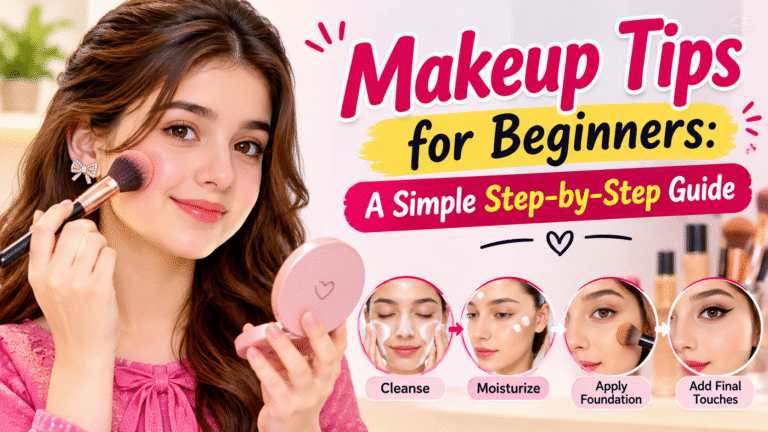
Also read: Makeup tips for beginners:Simple Tips to Get Started
Adjust the routine after a few weeks
Review the sessions you actually completed. If late evenings repeatedly disappear, try a different time or a smaller task. Look for a pattern that fits your real week instead of using missed sessions as a reason to abandon the plan altogether.
Bring recurring problems to your instructor. You may need a clearer demonstration, a different practice task or help understanding the assessment criteria. Buying another tool is not always the answer to a technique you have not yet mastered.
The aim is to arrive at lessons prepared, use feedback and build confidence through consistent work. A routine that leaves time for preparation and reflection can support that progress without turning every free hour into another obligation.