
 Awais Abbasi
 Saira Munsif
Published on: 14 Nov 2026, 5:00 pm
Updated on: 14 Nov 2026, 7:29 pm
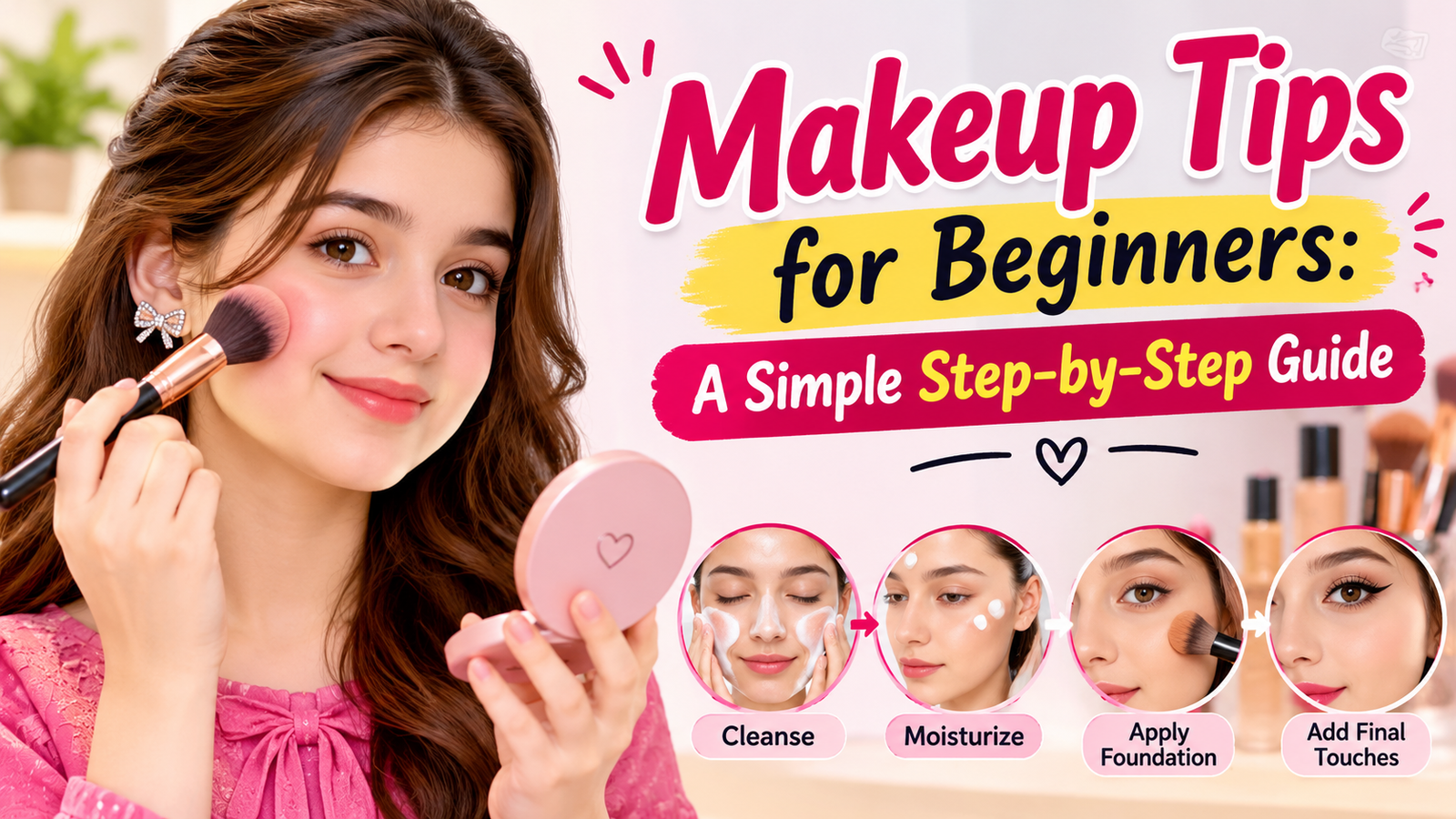
Are you new to makeup and do not know where to start? Do you look at makeup videos and wonder how people create such beautiful looks? Do not worry! Learning makeup is easier than you may think. You do not need expensive products or special skills to get started. With a few basic products and some simple steps, you can learn to create a fresh and natural makeup look at home.
Makeup is a fun way to explore colors and express your personal style. Some people enjoy wearing light makeup every day, while others prefer it for parties, weddings, and special events. There is no single right way to wear makeup. You can choose what makes you feel comfortable.
These makeup tips for beginners will help you understand the basic steps, choose useful products, and learn how to apply makeup correctly. Each step is explained in easy English, so even someone who has never used makeup before can follow along.
Remember, you do not need to learn everything in one day. Start with a simple routine, practice when you have time, and enjoy the process.
1. Understand Your Skin Type
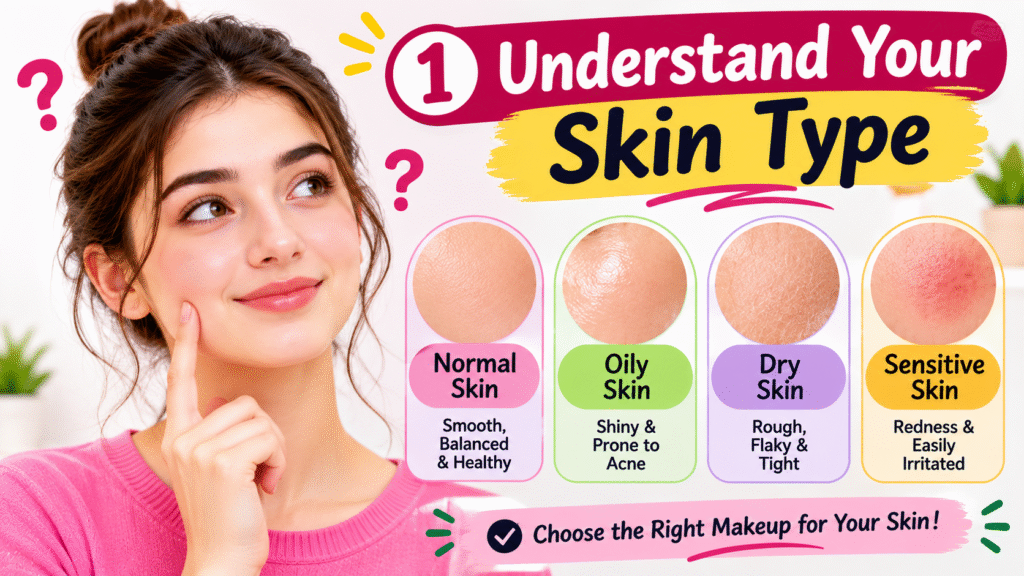
Before buying makeup products, it is helpful to understand your skin type. Different products work differently on different skin types. Knowing your skin can help you make better choices and find products that feel comfortable.
- There are four common skin types: oily, dry, combination, and normal.
- Oily skin may look shiny, especially around the forehead and nose.
- Dry skin may feel rough or tight.
- Combination skin has both oily and dry areas, while normal skin usually feels balanced.
For oily skin, lightweight and oil-free makeup products may feel more comfortable. For dry skin, moisturizing products can help your makeup look smooth. If you have combination skin, you may need different products for different areas of your face.
Always read product labels before buying anything. If your skin is sensitive, choose gentle products and test a small amount first. Avoid products that cause itching, redness, or discomfort.
Understanding your skin type is one of the most useful makeup tips for beginners because it helps you choose products that suit your needs.
“Choosing the right products for your skin type is an important part of basic skincare. You can also learn more about skin care basics from the American Academy of Dermatology.”
2. Start with Basic Makeup Products
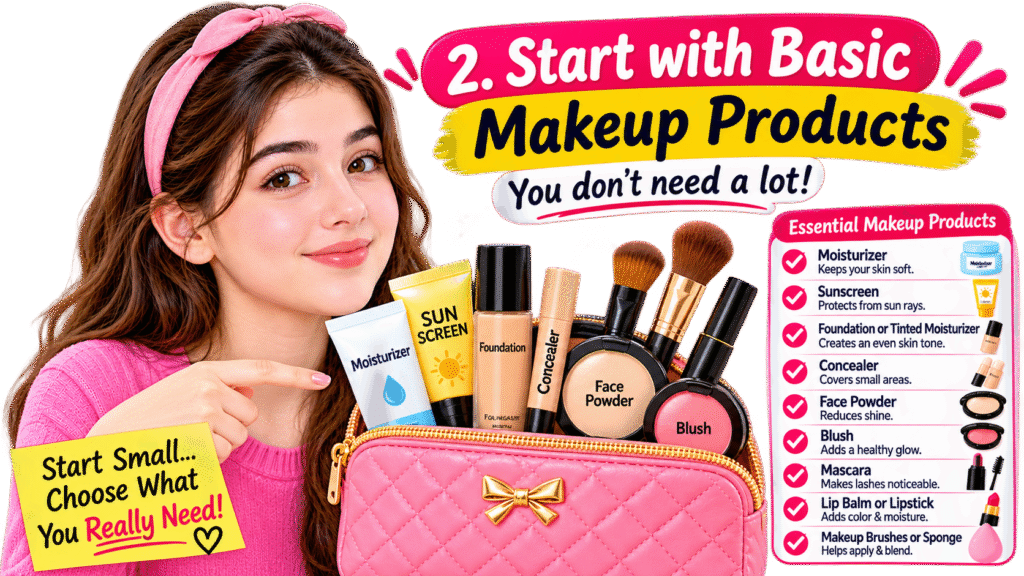
One common mistake beginners make is buying too many makeup products at once. You do not need a large makeup collection to create a beautiful look. Starting with a few basic products is a better idea.
Choose products that you can use easily and that match your skin and personal preferences. As you learn more about makeup, you can slowly add new items to your collection.
Essential Makeup Products for Beginners
Here are some basic products that can help you get started:
- Moisturizer: Helps keep your skin soft and comfortable.
- Sunscreen: Protects your skin from harmful sun rays.
- Foundation or tinted moisturizer: Helps create a more even-looking skin tone.
- Concealer: Helps cover small areas if you want extra coverage.
- Face powder: Helps reduce unwanted shine.
- Blush: Adds a soft touch of color to your cheeks.
- Mascara: Makes your eyelashes look more noticeable.
- Lip balm or lipstick: Adds color and moisture to your lips.
- Makeup brushes or sponge: Help apply and blend makeup.
You do not have to buy everything immediately. Start with the products you actually want to use. A small makeup bag with useful items is often better than a drawer full of products you never touch.
3. Prepare Your Skin Before Makeup
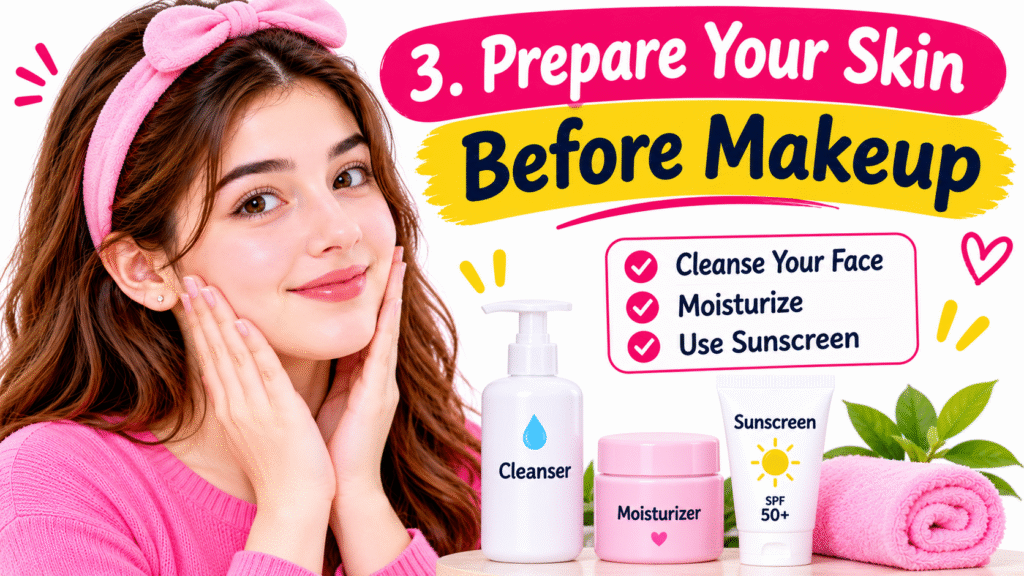
Good makeup starts with clean and comfortable skin. If you apply makeup to dirty or very dry skin, it may not look smooth. Skin preparation is an important step because it helps makeup sit better on your face.
Cleanse and Moisturize Your Face
- Wash Your Face: Use a gentle cleanser that suits your skin type. It helps remove dirt, sweat, and extra oil.
- Dry Your Face: Use clean water and gently dry your face with a soft, clean towel.
- Apply Moisturizer: Take a small amount of moisturizer and spread it gently over your face. This helps keep your skin soft.
- Use Sunscreen: During the daytime, apply broad-spectrum sunscreen with SPF 30 or higher to protect your skin from the sun.
- Try Makeup Primer: Apply primer if you like. It goes between skincare and makeup and can help makeup look smoother.
- Give Products Time: Let your moisturizer, sunscreen, and primer settle before applying makeup.
4. Choose the Right Foundation
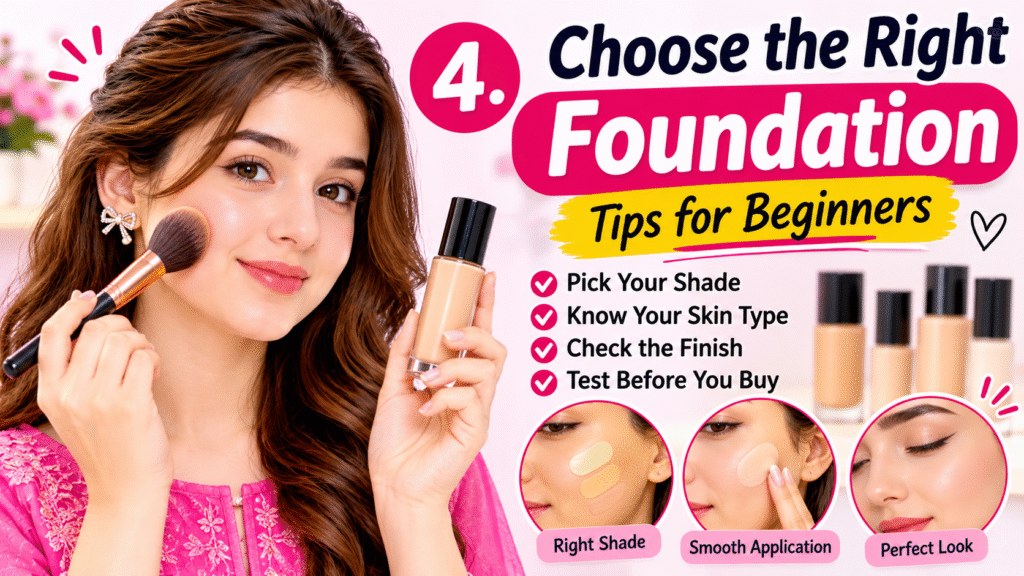
Foundation is a makeup product that helps create an even-looking base. It comes in different shades, textures, and coverage levels. Some foundations provide light coverage, while others provide more coverage.
Choosing the right foundation is important. Here are some simple tips to help beginners:
- Choose the Right Shade: Pick a foundation that matches your natural skin tone.
- Test Before Buying: Apply a little foundation near your jawline to check the shade.
- Check Natural Light: Look at the foundation in natural light to see if it blends with your skin.
- Start with Light Coverage: Beginners can choose a light-coverage foundation or tinted moisturizer because these products are easier to apply and blend.
- Use a Clean Makeup Tool: Apply foundation with a clean makeup sponge, brush, or fingertips.
- Apply a Small Amount: Start with a little product and add more only where needed.
- Blend Gently: Spread the foundation evenly to avoid visible lines or patches.
Remember: Do not apply too much foundation at once. A thin layer can look more natural and feel comfortable. Foundation is also optional. If you prefer your natural skin, you can skip it and use moisturizer, sunscreen, and a little concealer if needed.
5. Learn How to Apply Concealer
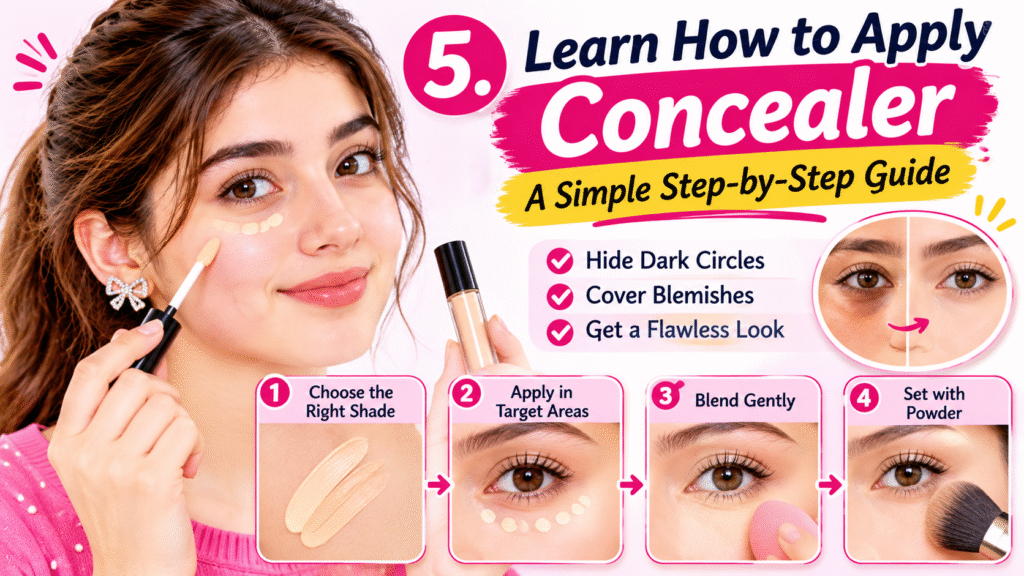
Concealer is a useful makeup product for beginners. It is usually thicker than foundation and provides extra coverage in selected areas. People often use it under their eyes or on small spots to create a more even-looking appearance.
Here are some easy tips for applying concealer:
- Choose the Right Shade: Pick a concealer that blends well with your natural skin tone.
- Apply Under Your Eyes: Use a small amount under your eyes if you want extra coverage.
- Cover Small Spots: Apply concealer to areas where you need a little extra coverage.
- Use a Small Amount: Start with a tiny dot and add more only if needed.
- Blend Gently: Use a clean makeup sponge or fingertip to blend the product.
- Avoid Rubbing: Blend carefully to prevent an uneven makeup look.
- Use Only Where Needed: You do not need to apply concealer all over your face.
Remember: A little concealer is enough for a simple makeup look. Using a small amount also saves your product and keeps your makeup looking natural.
6. Use Face Powder Carefully
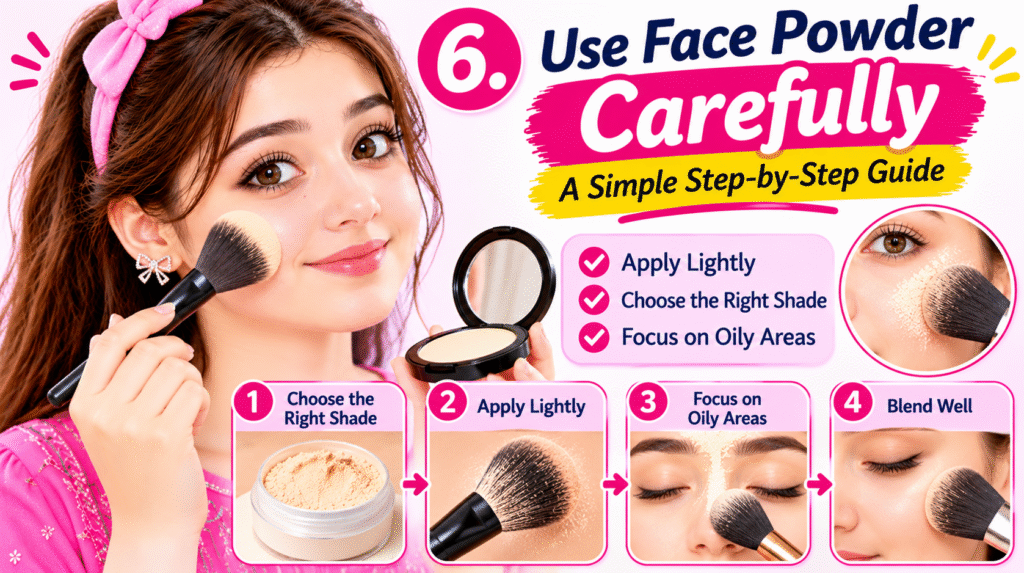
Face powder is a makeup product that helps reduce extra shine and keeps some makeup products in place. It is available in two common forms: loose powder and pressed powder. Both types can help create a smooth makeup look.
If your skin becomes oily during the day, face powder may help reduce shine around your forehead, nose, and chin.
Tips for Applying Face Powder
Follow these simple tips to apply face powder correctly:
- Choose the Right Powder: Select a powder that suits your skin type.
- Use a Clean Brush: Use a clean powder brush or makeup puff.
- Apply a Small Amount: Pick up a little powder and gently apply it to your face.
- Focus on Oily Areas: Apply powder to your forehead, nose, and chin if these areas become shiny.
- Avoid Heavy Layers: Do not apply too much powder because it may make your makeup look dry or uneven.
- Blend Properly: Make sure the powder blends smoothly with your makeup.
Remember: Face powder is not necessary for everyone. If your skin feels comfortable without it, you can skip this step. The best approach is to use only the amount you need.
7. Keep Your Eye Makeup Simple
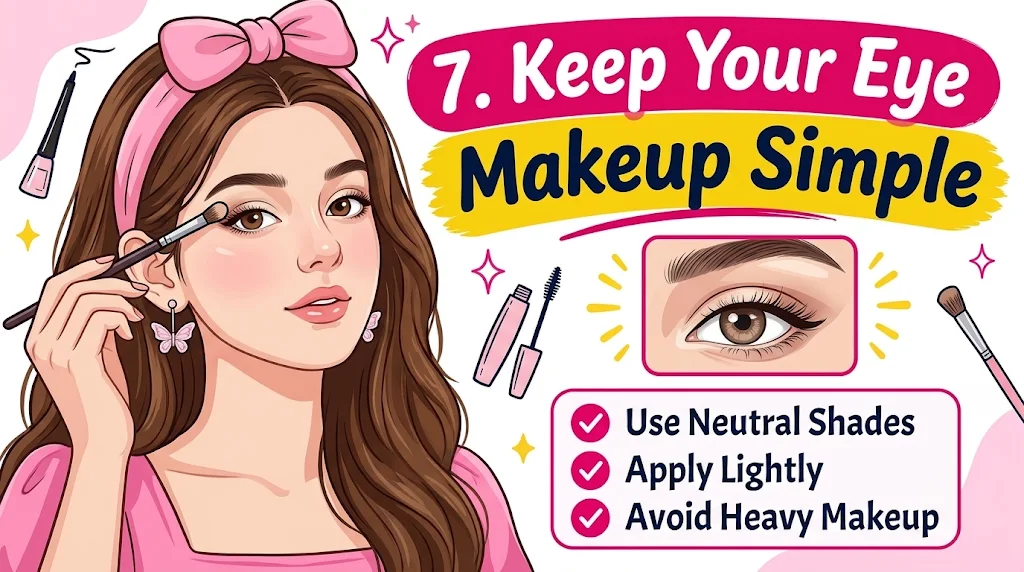
Eye makeup can make your overall look more interesting. However, beginners do not need to learn difficult eye makeup styles immediately. Start with simple colors and easy techniques to create a beautiful and natural look.
Neutral shades such as soft brown, beige, and light pink are good choices because they are easy to match with different outfits.
Easy Eyeshadow Tips for Beginners
Here are some simple tips to help you apply eyeshadow:
- Choose Neutral Colors: Start with soft brown, beige, or light pink shades.
- Use a Light Shade: Apply a light eyeshadow color over your eyelids.
- Try a Darker Shade: If you want more color, add a slightly darker shade near the outer part of your eyelid.
- Use a Clean Brush: Apply eyeshadow with a clean makeup brush or fingertip.
- Blend Gently: Blend the colors carefully to create a smooth look.
- Start with Less Product: Apply a small amount of eyeshadow and add more if needed.
Apply Mascara and Eyeliner
Mascara and eyeliner are popular eye makeup products. Mascara makes your eyelashes look darker and more noticeable, while eyeliner adds definition around your eyes.
Follow these easy tips when using them:
- Apply Mascara Carefully: Move the mascara brush gently from the base of your upper lashes towards the tips.
- Avoid Pumping the Wand: Do not pump the mascara wand inside its tube because extra air can make the product dry faster.
- Choose Pencil Eyeliner: Beginners can start with pencil eyeliner because it is often easier to control than liquid eyeliner.
- Draw a Thin Line: Apply a thin line close to your upper lash line for a simple look.
- Keep It Simple: You can skip eyeliner if you prefer a natural makeup look.
- Use Clean Products: Never share mascara or eyeliner with other people.
Remember: Always use eye makeup carefully. Stop using any product that causes irritation or discomfort. You do not need heavy eye makeup to create a beautiful look.
8. Add a Little Color with Blush
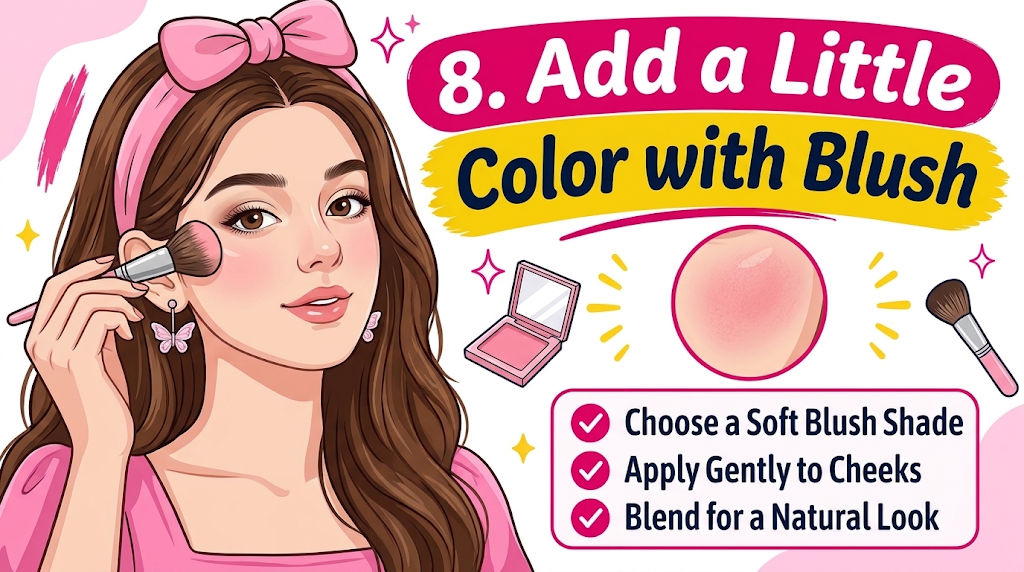
Blush adds a soft touch of color to your cheeks. It can make your makeup look fresh and lively. Blush comes in different forms, including powder, cream, and liquid. Beginners can choose the type that feels easiest to use.
Easy Blush Tips for Beginners
Here are some simple tips to help you choose and apply blush:
- Choose the Right Color: Soft pink, peach, and rose shades are popular choices for a fresh makeup look.
- Try Powder Blush: Powder blush is a good option for beginners because it is easy to apply with a makeup brush.
- Use Cream Blush: Cream blush can be applied with clean fingers and blended gently.
- Apply a Small Amount: Start with a little blush to avoid applying too much color.
- Use a Clean Brush: Apply powder blush with a clean and soft makeup brush.
- Blend Gently: Blend the blush smoothly so there are no harsh lines.
- Add More if Needed: If you want stronger color, add a little more blush slowly.
Highlighter is another makeup product that beginners can try once they understand the basics of blush and face makeup. It adds a soft glow to areas of the face, such as the cheekbones, nose, and forehead. If you want to learn more about where and how to apply it, check out this helpful guide on how to apply highlighter on the face.
Remember: Blush is optional, but it can be a nice addition to a simple makeup routine. The best tip for beginners is to start with less product and blend it properly.
9. Choose the Right Lip Color
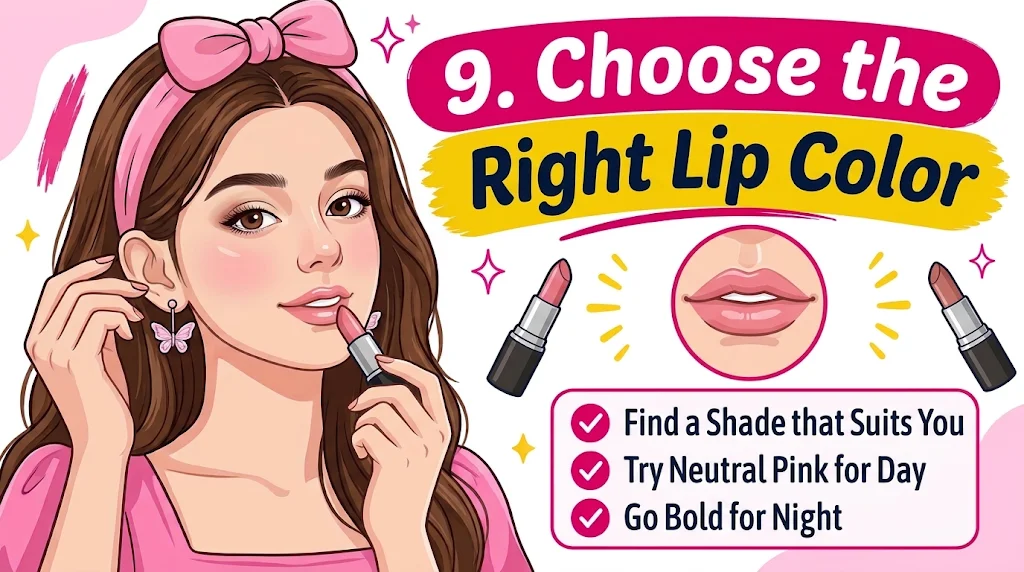
Lip products are a simple way to add color to your makeup look. There are many choices, including lip balm, lipstick, lip gloss, and tinted lip products. If you are new to makeup, start with simple and comfortable lip products.
Different Types of Lip Products
Here are some popular lip products for beginners:
- Lip Balm: Helps keep your lips soft and moisturized.
- Lipstick: Adds color to your lips and comes in many shades.
- Lip Gloss: Gives your lips a shiny and smooth finish.
- Tinted Lip Balm: Adds a little color while keeping your lips moisturized.
- Nude Lipstick: Gives a simple and natural makeup look.
- Pink or Peach Lipstick: Adds a soft touch of color to your lips.
Easy Lip Makeup Tips for Beginners
Follow these simple tips when applying lip products:
- Clean Your Lips: Make sure your lips are clean before applying lip color.
- Apply Lip Balm: If your lips feel dry, use a little lip balm first.
- Choose Your Favorite Color: Try soft pink, peach, or nude shades.
- Apply Lipstick Carefully: Use a small amount and spread it evenly over your lips.
- Keep It Simple: Choose light colors for everyday use and brighter shades for special occasions.
- Avoid Sharing Lip Products: Use your own lipstick and lip balm for better hygiene.
Remember: You do not need to follow every makeup trend. Choose lip colors that you personally enjoy and feel comfortable wearing.
10. Learn to Use Makeup Brushes
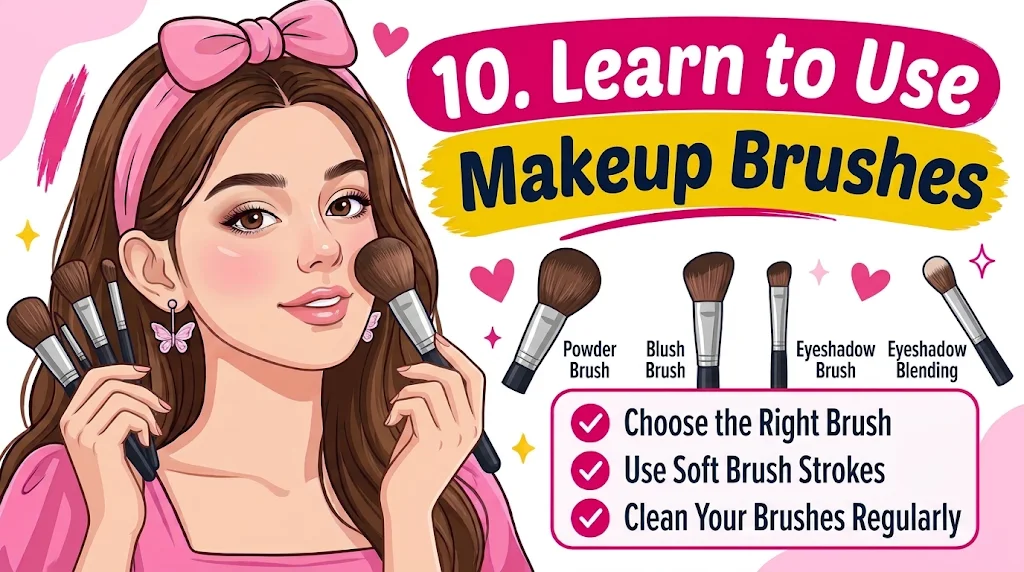
Makeup brushes help apply and blend different makeup products. You do not need a large brush collection when starting out. A few useful brushes are enough for a simple makeup routine.
Different Types of Makeup Brushes and Their Uses
Here are some common makeup brushes that beginners should know about:
- Foundation Brush: Helps spread foundation evenly across your face.
- Powder Brush: A soft and fluffy brush used to apply face powder.
- Blush Brush: Helps add color to your cheeks and blend blush smoothly.
- Eyeshadow Brush: Helps apply eyeshadow to your eyelids.
- Blending Brush: Helps blend different eyeshadow colors for a smooth look.
- Concealer Brush: Helps apply concealer to small areas of your face.
How to Use Makeup Sponges
Makeup sponges are another useful tool for beginners. They help blend foundation and concealer smoothly.
Follow these simple tips when using a makeup sponge:
- Keep It Clean: Always use a clean makeup sponge.
- Follow Instructions: Check whether your sponge should be used wet or dry.
- Blend Gently: Use gentle movements to blend foundation and concealer.
- Clean Regularly: Wash your sponge regularly to remove dirt and old makeup.
- Replace Damaged Sponges: Do not continue using sponges that are damaged or worn out.
Remember: You do not need expensive makeup tools to create a beautiful look. Learning to use a few basic brushes and sponges can make your makeup routine easier and more enjoyable.
11. Follow a Simple Makeup Routine
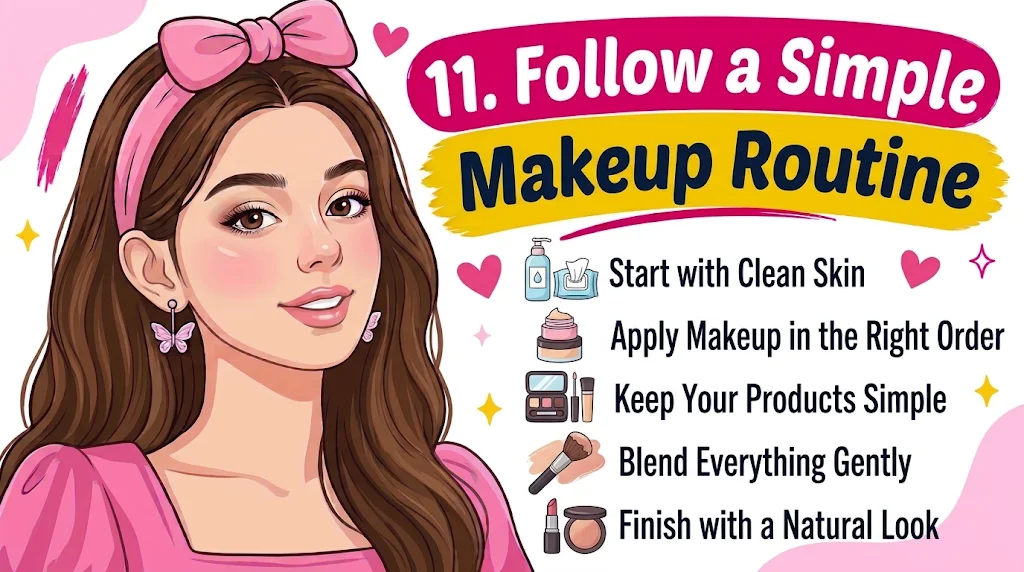
When you are learning makeup, following the same basic steps can make everything easier. You do not need to try a new technique every day. A simple makeup routine can help you create a fresh and natural look without using too many products.
Step-by-Step Makeup Routine for Beginners
Follow these 10 easy steps to apply makeup:
- Wash Your Face: Start by washing your face with a gentle cleanser to remove dirt and oil.
- Apply Moisturizer: Use a suitable moisturizer to keep your skin soft and comfortable.
- Apply Sunscreen: During the daytime, use sunscreen to protect your skin from the sun.
- Use Primer: Apply primer if you want to create a smoother base for your makeup.
- Apply Foundation: Use a small amount of foundation or tinted moisturizer to create an even-looking base.
- Add Concealer: Apply concealer to areas where you need extra coverage.
- Use Face Powder: Apply a little face powder if your skin becomes oily or shiny.
- Add Blush: Apply a small amount of blush to your cheeks for a fresh look.
- Apply Eye Makeup: Use simple eyeshadow and mascara if you like.
- Finish with Lip Color: Apply lip balm or your favorite lipstick to complete your makeup look.
Make Your Makeup Routine Simple
You can change these steps according to your preferences and the products you have. For example:
- If you do not like foundation, you can skip it.
- If you prefer simple eye makeup, use only mascara.
- If your skin does not need powder, you can leave it out.
- If you like natural lips, use lip balm instead of lipstick.
Remember: Makeup should be something you enjoy, not a long list of rules. Practice your routine whenever you have free time. With practice, you will become more familiar with different products and learn what works best for you.
12. Common Makeup Mistakes Beginners Should Avoid
Everyone makes mistakes while learning something new. Makeup is no different. Beginners may face small problems when choosing products or applying makeup. The good news is that most makeup mistakes are easy to fix.
Common Makeup Mistakes to Avoid
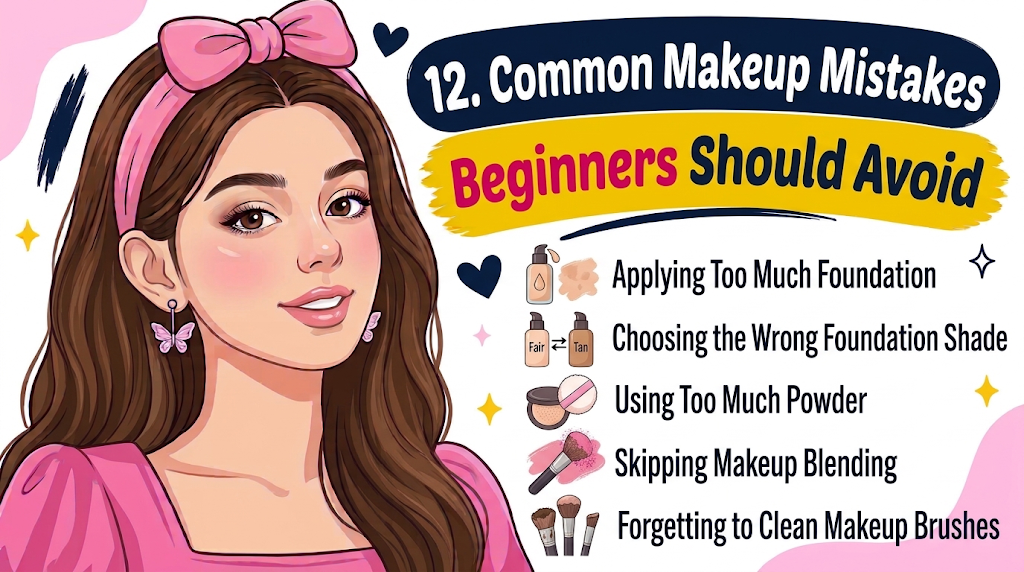
Here are some common mistakes beginners should know about:
Using Too Much Product: Applying too much foundation, concealer, or powder can make your makeup look heavy. Start with a small amount and add more only if needed.
Choosing the Wrong Foundation Shade: A foundation that is too light or too dark may not blend naturally with your skin. Always check the shade before buying.
Using Dirty Makeup Brushes: Dirty brushes can collect dirt, oil, and old makeup. Clean your makeup brushes regularly.
Skipping Skincare: Applying makeup without cleaning and moisturizing your face may make it look uneven. Always prepare your skin before makeup.
Buying Too Many Products: Do not buy makeup products just because they are popular. Choose products that you actually need.
Using Expired Makeup: Always check expiry dates and avoid using old or expired products.
Sharing Eye Makeup: Avoid sharing mascara and eyeliner with other people to maintain good hygiene.
Sleeping with Makeup On: Always remove your makeup before going to bed to keep your skin clean.
Not Blending Properly: Take your time when blending foundation, concealer, and other products.
Following Every Beauty Trend: You do not need to follow every makeup trend. Choose a style that you personally enjoy.
Remember: Learning makeup takes time and practice. Do not worry about small mistakes. Give yourself time to understand different products and discover what works best for you.
13. Keep Your Makeup Products Clean
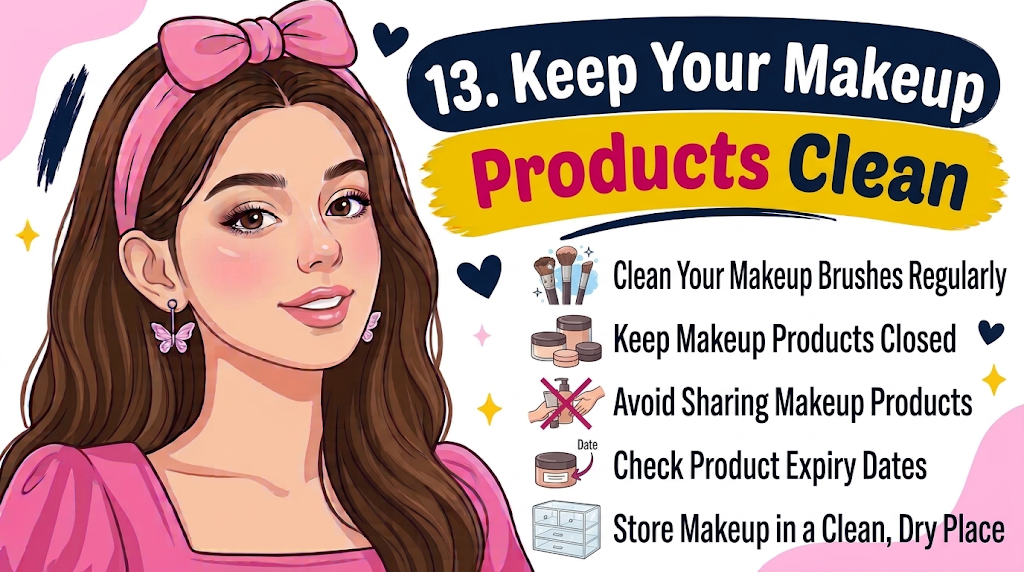
Clean Your Makeup Brushes: Wash reusable makeup brushes regularly with a suitable brush cleanser or gentle soap. Rinse them well and let them dry completely before using them again.
Wash Makeup Sponges: Clean your makeup sponges regularly by following the manufacturer’s instructions. Replace damaged or worn-out sponges.
Check Expiry Dates: Always check the expiry information on your makeup products. Avoid using expired makeup.
Store Makeup Properly: Keep your makeup products in a cool and dry place. Avoid direct sunlight and very hot areas.
Do Not Share Makeup: Never share products that come into direct contact with your eyes or lips.
Check Product Quality: Avoid using makeup if its smell, color, or texture changes unexpectedly.
Keeping your makeup products clean is important for maintaining good skin health. Always check the condition of your makeup, clean your brushes regularly, and avoid sharing products with others. Using safe and clean cosmetics can help reduce the risk of skin irritation and other problems. For more helpful information, read these makeup safety tips from the FDA.
Conclusion
Learning makeup does not have to be difficult. With a few basic products, some practice, and a simple routine, beginners can learn how to apply makeup with confidence. You do not need expensive products or professional skills to get started.
These makeup tips for beginners explain how to prepare your skin, choose the right foundation, apply concealer, use blush, and create simple eye and lip makeup.
Start with a few basic products and learn how to use them one by one. Take your time, try different colors, and choose a routine that feels comfortable for you. Remember, you do not have to follow every makeup trend or use every product.
Most importantly, makeup is a personal choice. You can enjoy a full makeup look, keep things simple, or choose not to wear makeup at all. There are no strict rules to follow. Have fun, keep learning, and enjoy finding a style that makes you feel comfortable!