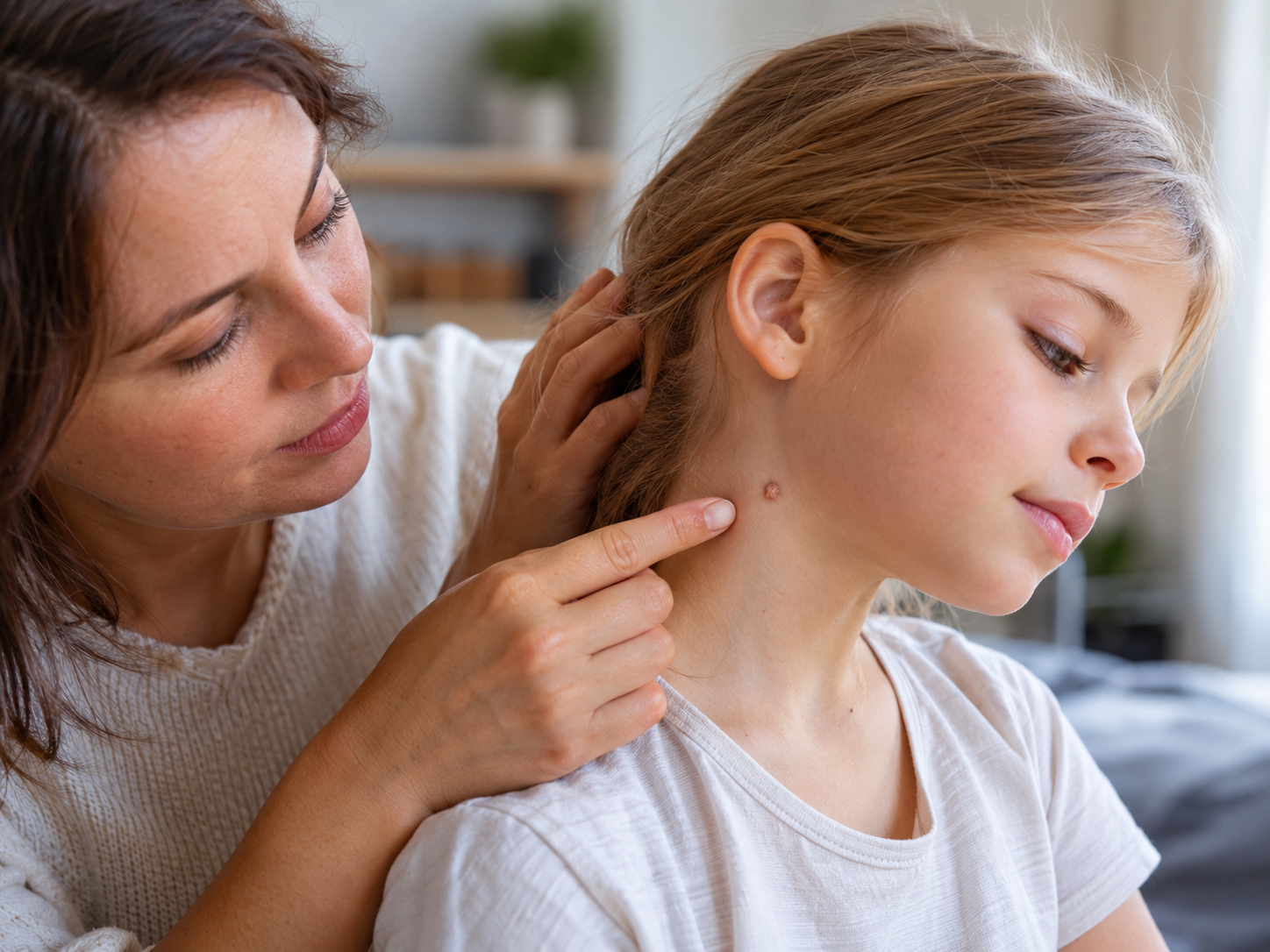
Skin tags on children are usually harmless, but parents should have an unfamiliar skin growth checked before trying to remove it. The safest approach is to confirm what the growth is, watch for changes, and consult a healthcare professional if removal is necessary. Home removal products, cutting, and tying off a skin tag can cause bleeding, infection, or scarring, especially on a child’s delicate skin.
Why Do Children Develop Skin Tags?
Friction is one possible reason skin tags develop. Repeated rubbing from clothing, skin folds, or other surfaces may contribute to their formation, although the exact cause is not always clear.
Finding a small growth in your child does not automatically mean something is wrong. However, because skin tags are less commonly discussed in children than in adults, it is sensible to arrange an assessment when a growth is new or its identity is uncertain.
What Should Parents Do Before Considering Skin Tag Removal?
Have the growth checked first
Start by making an appointment with your child’s doctor or a dermatologist. The clinician can assess the growth’s appearance, location, and history to decide whether treatment is needed.
This step is particularly important if the growth has appeared recently, looks unusual, or has changed over time. A diagnosis helps prevent parents from accidentally treating a wart, mole, or another skin condition as a skin tag.
Monitor changes and possible irritation
If a healthcare professional confirms that the growth is harmless and does not require removal, observation may be enough. Notice whether it catches on clothing, becomes uncomfortable, or gets irritated during bathing and everyday activities.
Arrange a medical assessment if the growth grows quickly, becomes painful, bleeds without an obvious cause, or changes in appearance. Multiple new growths should also be discussed with a healthcare professional.
Which Skin Tag Removal Options Are Appropriate for Children?
The right approach depends on the child’s age, the growth’s location, and whether removal is medically necessary. A doctor can explain the likely benefits and risks before recommending a procedure.
Professional removal
When removal is appropriate, a qualified clinician may use a small sterile instrument, freezing, or another suitable procedure. The choice depends on the individual case and should be made by the treating professional.
Medical removal can still cause temporary discomfort, bleeding, skin-color changes, or scarring. Parents should ask how pain will be managed, what aftercare is required, and whether the removed tissue needs further examination.
Leaving a harmless skin tag alone
Not every skin tag needs treatment. If the growth has been properly identified and is not causing discomfort or other problems, a clinician may recommend leaving it alone and checking for changes.
This can help a child avoid an unnecessary procedure. If the skin tag repeatedly catches on clothing or is close to the eye, however, ask the clinician whether removal would be appropriate.
Are Home Skin Tag Removers Safe for Kids?
Parents searching online for a skin tag remover safe for kids should be cautious about products that promise easy removal. Products intended to dissolve, burn, freeze, or otherwise remove skin growths at home may irritate or damage surrounding skin, and a product’s label does not establish that it is safe for children.
Do not cut off a skin tag with scissors, tie it tightly with thread, apply wart remover, or use acids and essential oils to burn or dissolve it. These approaches can cause injury, infection, bleeding, or permanent marks. A child’s skin deserves particular care, and an online product should not replace a medical assessment.
How Can Parents Care for the Area Safely?
Until the growth has been assessed, keep the area clean and avoid rubbing, squeezing, scratching, or picking at it. Choose comfortable clothing that does not repeatedly catch on the growth, and avoid applying strong skincare ingredients or unapproved remedies.
If the growth is accidentally scratched, gently clean the area and apply light pressure with clean gauze if it bleeds. Seek medical advice if bleeding does not stop, the area becomes increasingly red or swollen, pus develops, or your child experiences significant pain.
Helping Children Feel Comfortable About Skin Tags
A visible skin growth can make a child feel self-conscious, particularly if classmates notice it. Parents can reassure their child that skin differences are common and that a small growth does not automatically indicate a serious problem.
If the child is worried about its appearance, listen without making the growth seem alarming. A medical assessment can clarify what it is and help the family decide whether treatment is necessary.
Frequently Asked Questions
Q. Can skin tags disappear on their own?
- Skin tags generally persist unless they fall off or are removed. If a growth changes or disappears unexpectedly, ask a healthcare professional for advice if its identity was never confirmed.
Q. Can I use an over-the-counter skin tag remover on my child?
- Do not use an over-the-counter removal product without advice from your child’s healthcare professional. Products marketed for home removal can damage the skin and may be unsuitable for children.
Q. When should a child’s skin tag be checked?
- Arrange an assessment if the growth is new or uncertain, grows quickly, bleeds, becomes painful, changes appearance, or develops alongside several other growths. Seek prompt medical advice for significant or persistent bleeding.
Q. Does every skin tag need to be removed?
- No. A confirmed, harmless skin tag that causes no problems often does not need treatment. A clinician can help determine whether observation or professional removal is appropriate for your child.