 Awais Abbasi
 Saira Munsif
Published on: 27 Nov 2026, 8:26 pm
Updated on: 27 Nov 2026, 8:26 pm
Blonde never really goes out of style, but the way colorists create it has changed a lot. Clients who once asked for “highlights” now come in with photos of soft, lived-in blonde, face-framing brightness or seamless balayage. For stylists and students learning color, understanding the difference between these techniques is essential to giving clients what they actually want.
Experienced colorists, such as Sarah at Mini Stylist HQ, a balayage and blonde specialist in Jacksonville NC who is a board-certified colorist and Olaplex Pro Educator, often start every blonde consultation by clarifying exactly which look a client is after. Here is a practical breakdown of balayage and highlights, and how to choose between them.
What are highlights?
Traditional highlights are created by weaving or slicing sections of hair and placing lightener in foils from root to end, or close to the root. The foils trap heat and help lift the hair evenly.
Highlights typically produce:
- A more uniform, structured result
- Brightness that starts close to the scalp
- Noticeable contrast that can range from subtle to bold
- A defined regrowth line as hair grows out
Highlights are a good choice for clients who want consistent brightness all over, a polished look, or significant lift from root to tip.
What is balayage?
Balayage, from a French word meaning “to sweep,” is a freehand painting technique. The colorist paints lightener directly onto the surface of the hair, usually concentrating brightness through the mid-lengths and ends and keeping the root softer and more natural.
Balayage usually creates:
- A soft, sun-kissed effect
- Gradual blending from darker roots to lighter ends
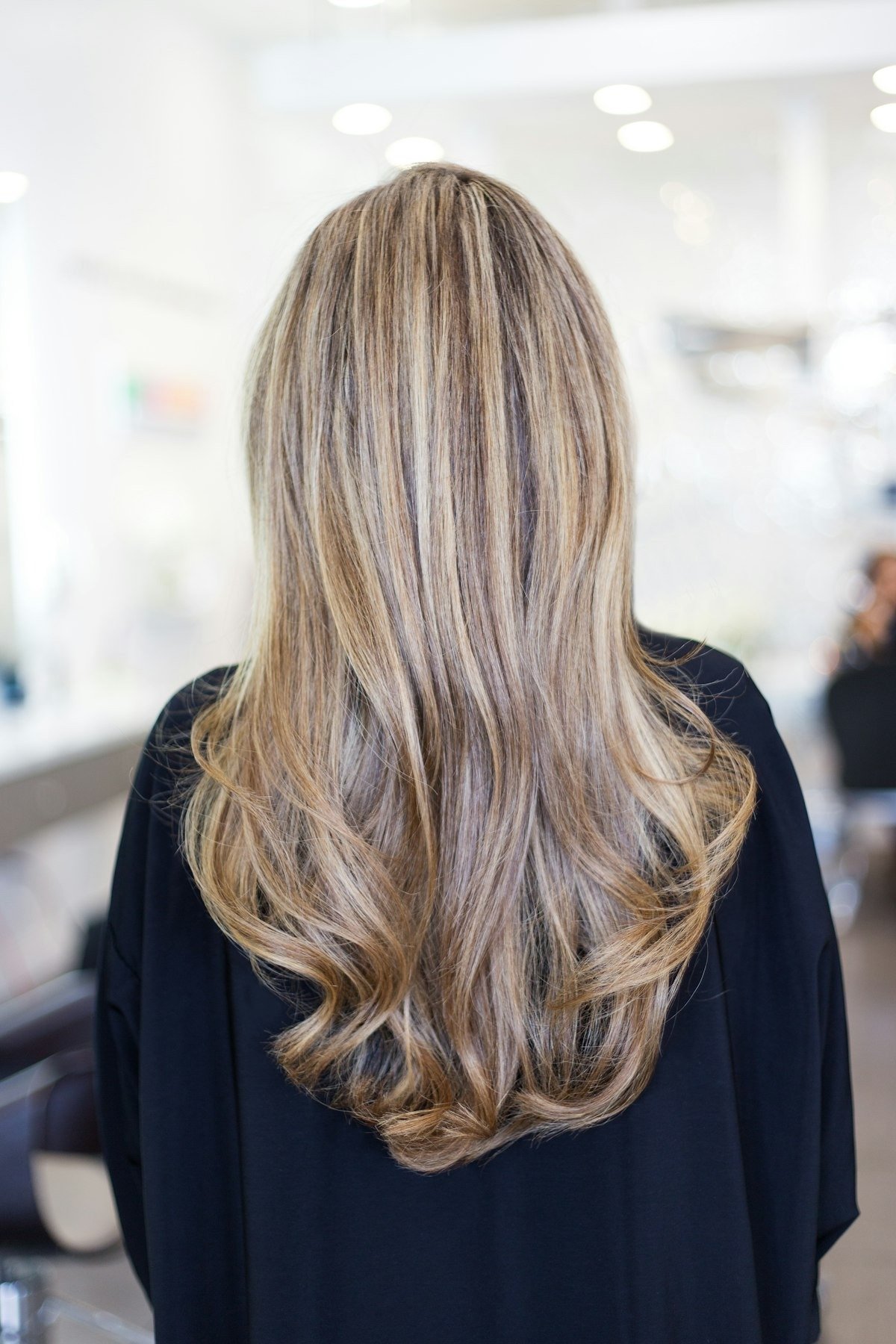
- A natural, dimensional look
- Softer grow-out with less noticeable regrowth
It is ideal for clients who want low-maintenance color, a lived-in look or brightness that grows out gracefully.
Key differences at a glance
Placement. Highlights are placed in foils with precise sections. Balayage is painted freehand on the surface.
Root area. Highlights often start close to the root. Balayage keeps the root softer and darker.
Maintenance. Highlights typically need more frequent touch-ups. Balayage can often go longer between appointments.
Result. Highlights look more uniform. Balayage looks more blended and natural.
Many colorists also combine techniques, using foils for extra brightness in certain areas and painting elsewhere for softness.
How to choose the right blonde
During a consultation, a good colorist asks questions such as:
- How bright do you want to be? Higher contrast and very light results often call for foils.
- How often can you come in? Clients who want fewer appointments usually do well with balayage.
- What is your starting point? Natural color, previous color and hair condition all affect what is possible in one visit.
- What is your lifestyle? Time in the sun, swimming and styling habits all matter.
- What do you love and dislike? Photos of both help avoid misunderstandings.
Protecting hair while going blonde
Lightening always involves some risk to the hair’s integrity, which is why technique and products matter. Many colorists use bond-building treatments during and after lightening to help protect hair. Going lighter gradually over multiple appointments can also reduce damage and give better results than trying to achieve a dramatic change in one session.
At home, clients can help by:
- Using sulfate-free shampoo and a purple shampoo as needed
- Adding a weekly deep-conditioning or bond-repair treatment
- Using heat protectant before styling
- Booking regular toners and glosses to keep blonde fresh
Lived-in blonde: a popular middle ground
“Lived-in” blonde has become one of the most requested looks. It blends a softer root with bright ends and face-framing pieces, often combining balayage with a few strategically placed foils. The result is low maintenance yet bright where it counts.
The bottom line
Balayage and highlights both create beautiful blonde, but they serve different goals. Highlights deliver structured, even brightness, while balayage offers a soft, natural and lower-maintenance result. The best choice depends on the client’s hair, lifestyle and expectations, which is why a thorough consultation with an experienced colorist is the most important step toward the perfect blonde.