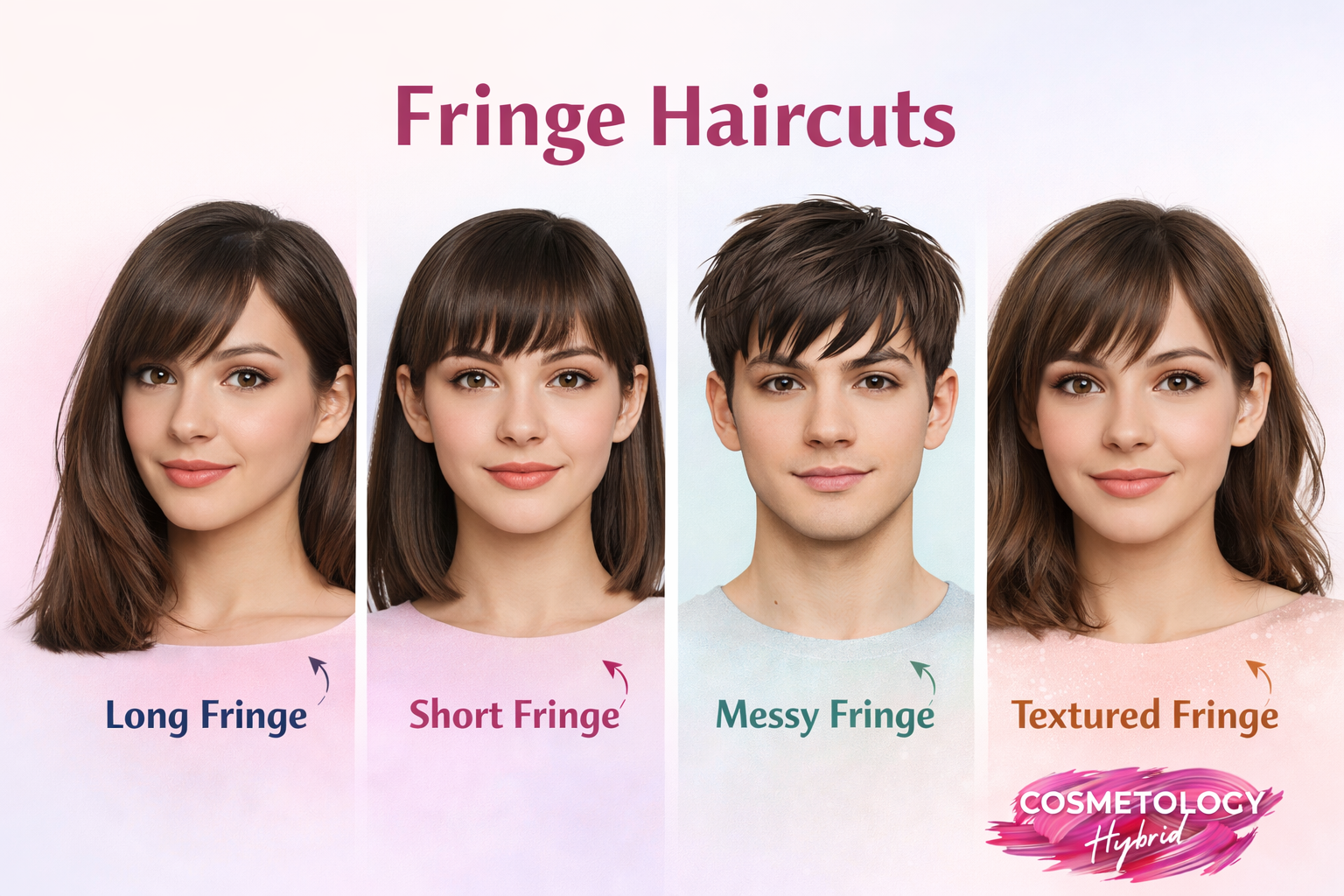
Choosing the right haircut can feel overwhelming, especially when trends change fast and every style seems to suit someone else better. Many people struggle with fringe haircuts because they are unsure what a fringe actually is, how it differs from bangs, or whether it will suit their face shape. A poorly chosen fringe can feel hard to manage and difficult to grow out.
The good news is that fringe haircuts are one of the most versatile styles in modern hair fashion. When chosen correctly, a fringe can frame the face, soften strong features, and instantly update your look. Whether you prefer a messy, textured, long, or short fringe, understanding the basics helps you make the right decision.
This complete guide explains what a fringe haircut is, the most popular fringe styles for men, women, and boys, how to match a fringe to your face shape, and how to maintain it for long-lasting results.
What Is a Fringe in a Haircut?
A fringe haircut refers to hair that is cut to fall over the forehead. The length, thickness, and shape of the fringe can vary depending on the style and personal preference. Fringe haircuts can be bold and blunt or soft and layered.
Fringes are popular because they instantly change how a face looks without cutting the entire length of the hair. They can hide a high forehead, balance facial proportions, and add movement to simple haircuts.
What’s the Difference Between Fringe and Bangs?
The difference between fringe and bangs is mainly based on regional language rather than a true styling difference. In the UK, Ireland, and many parts of Europe, hair cut to fall over the forehead is traditionally called a fringe. In the United States, Canada, and some other regions, the exact same concept is referred to as bangs. Both terms describe hair that frames or covers the forehead.
In everyday conversation, the word fringe is often associated with softer, layered, or more natural-looking styles that blend into the rest of the haircut. On the other hand, bangs may sound more blunt or bold, especially when people think of straight-across cuts. However, this distinction is not a strict rule and varies widely depending on personal preference and trends.
In professional hair styling and cosmetology education, both terms are frequently used interchangeably. Stylists focus more on the shape, length, texture, and face-framing effect rather than the name itself. What matters most is clear communication between the client and stylist to ensure the desired look is achieved.
Types of Fringe Haircuts
Textured Fringe Haircut
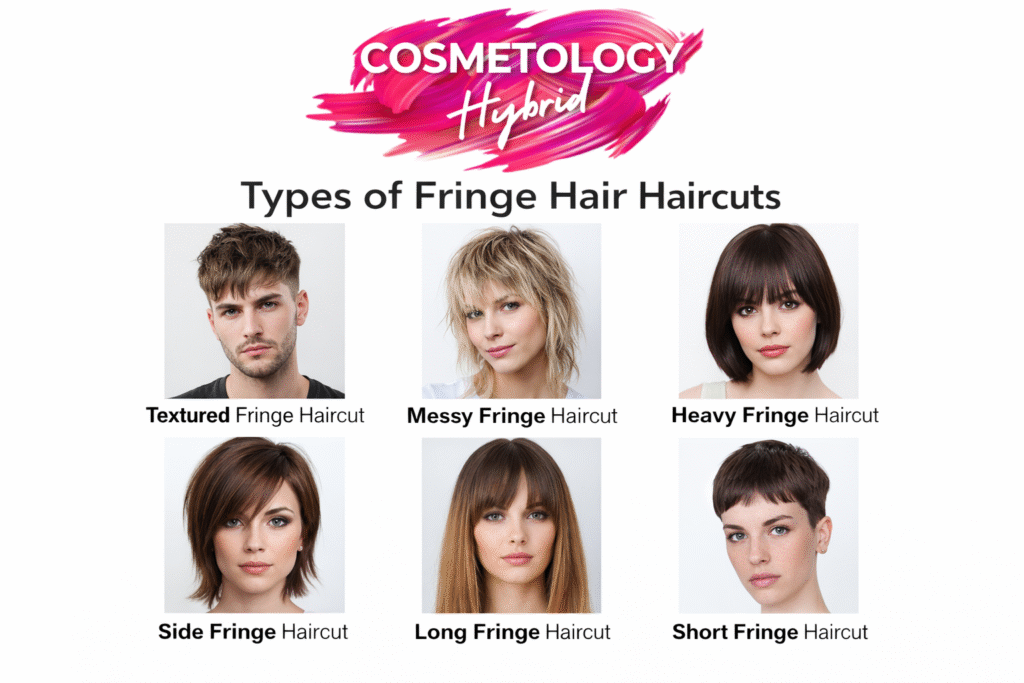
A textured fringe haircut has layers cut into the fringe to create movement and a natural finish. This style works well for people who want volume without heaviness and is especially popular in modern men’s haircuts.
Messy Fringe Haircut
The messy fringe haircut has a relaxed, slightly undone look. It is ideal for casual styles and suits people who prefer low-maintenance hair with personality.
Heavy Fringe Haircut
A heavy fringe haircut features thick, full hair across the forehead. This style makes a strong statement and works best with straight or slightly wavy hair.
Side Fringe Haircut
A side fringe haircut is swept to one side rather than falling straight down. It is flattering for many face shapes and easy to blend into longer hairstyles.
Long Fringe Haircut
A long fringe haircut reaches below the eyebrows and can be styled in different ways. It offers flexibility and is easy to grow out if you want to change your look.
Short Fringe Haircut
A short fringe haircut sits higher on the forehead and creates a clean, modern appearance. This style works well for sharp, structured haircuts.
7 Powerful Steps to Master the Skin Fade Haircut
5 Powerful Reasons the Caesar Haircut Never Fails
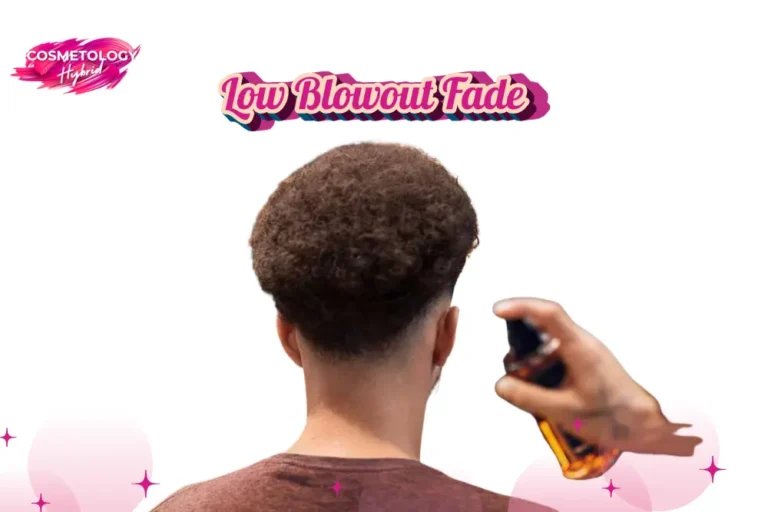
Mastering the Low Blowout Fade, Complete Guide for Hybrid Cosmetology School
Fringe Haircuts for Boys & Teens
Fringe haircuts for boys and teens are popular because they balance style, comfort, and practicality. These haircuts work well for school, sports, and everyday activities while still allowing young clients to express their personality. Fringe styles for this age group are usually designed to be easy to manage and quick to style.
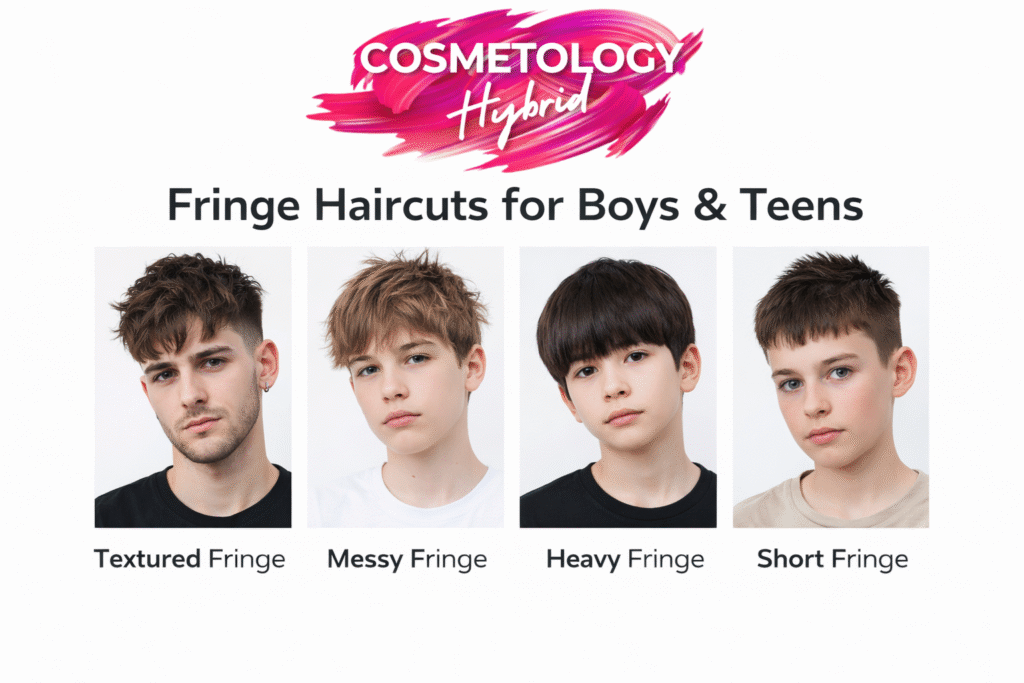
Messy fringe haircuts are especially common for boys and teens because they offer a relaxed and youthful appearance. This style does not require precise daily styling and grows out naturally without losing its shape too quickly. Textured fringes are also a great option, as they reduce bulk and keep the hair looking light and natural.
When choosing a fringe haircut for boys or teens, hair texture and face shape should be considered. Softer fringes work well for younger children, while slightly longer or side-swept fringes suit teenagers who want a more modern look. Overall, fringe haircuts remain one of the most versatile and age-appropriate choices for younger clients.
What Fringe Suits My Face Shape?
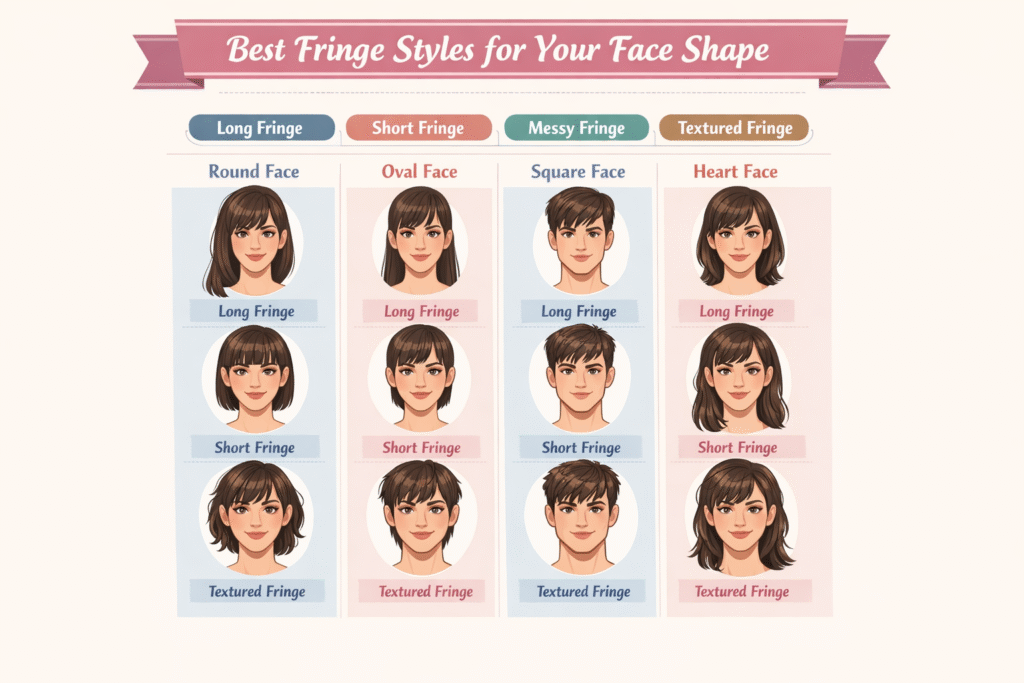
Choosing the right fringe for your face shape makes a big difference in how the haircut looks.
Face Shape Comparison Table
| Face Shape | Best Fringe Styles | Styles to Avoid |
| Round Face | Side fringe, textured fringe, long fringe | Heavy blunt fringe |
| Oval Face | Almost all fringe styles | Very short heavy fringe |
| Square Face | Soft fringe, messy fringe, layered fringe | Sharp blunt fringe |
| Heart-Shaped Face | Side fringe, long fringe | Thick heavy fringe |
This table helps you quickly identify which fringe styles balance your facial features best.
Messy vs Textured Fringe Haircuts
Messy fringe haircuts focus on a relaxed, effortless finish that looks natural rather than styled. This type of fringe often appears slightly uneven on purpose, giving it a casual and lived-in feel. Messy fringes are ideal for people who prefer low-maintenance styles and do not want to spend much time on daily styling.
Textured fringe haircuts, on the other hand, are carefully layered to control volume, shape, and movement. The texture helps the fringe sit better on the forehead and prevents it from looking too heavy. This style is especially useful for thick hair, as it removes bulk while maintaining structure.
Both messy and textured fringe haircuts are very popular, but textured fringes usually last longer between trims. Because the shape is more controlled, textured fringes grow out more evenly and are easier to refresh with minimal styling.
How to Style and Maintain a Fringe Haircut
Fringe haircuts require regular trims to maintain their shape and prevent them from falling into the eyes. On average, a fringe should be trimmed every three to five weeks, depending on how fast the hair grows and the length of the style. Regular maintenance keeps the fringe looking neat and intentional.
Light styling products such as creams, mousses, or soft-hold sprays help control movement without making the hair feel stiff or heavy. Using too much product can weigh the fringe down and make it look greasy, so a small amount is usually enough.
Daily styling is simple when the fringe is cut correctly. Blow-drying the fringe in the desired direction while it is slightly damp helps set the shape. Using minimal heat and a gentle brush keeps the fringe smooth, natural, and easy to manage throughout the day.
Fringe Haircut Trends in 2025
Fringe haircut trends in 2025 continue to focus on natural texture, softness, and versatility. Rather than sharp or overly dramatic styles, most trends lean toward fringes that move naturally and blend seamlessly with the rest of the haircut. This makes fringes easier to style and suitable for everyday wear.
Messy and textured fringes remain especially popular for men, as they offer a modern look without requiring heavy styling. For women, long fringes and side-swept fringes dominate current trends because they frame the face gently and are easy to grow out.
Social media continues to influence fringe haircut trends, with short videos and photos showcasing soft, wearable styles. Clients are increasingly choosing fringes that enhance their natural features rather than extreme cuts, making fringe haircuts more timeless and adaptable than ever.
Final Thoughts on Choosing the Right Fringe Haircut
A fringe haircut can completely transform your appearance when chosen correctly. Understanding your face shape, hair texture, and lifestyle helps you select a fringe that is both stylish and easy to maintain.
Whether you prefer a bold heavy fringe or a soft textured look, fringe haircuts remain one of the most adaptable and timeless choices in modern hairstyling.
For students and aspiring professionals, hybrid cosmetology programs, such as those offered at hybridcosmetologyschool.com, provide comprehensive training in both barbering and cosmetology. These programs cover cutting, styling, texturing, and maintenance techniques, preparing students to deliver high-quality haircuts—including fringe styles—across diverse client needs. By mastering these skills, graduates gain the expertise to create personalized looks and stay ahead in the ever-evolving beauty industry.