Dreaming of turning your passion for hair, makeup, nails, or skin care into a real career? You’re not alone — many beginners feel excited but overwhelmed. Questions like “Do I really need formal training?” “How long will it take?” or “Can I balance it with my busy life?” often hold people back. The good news? Cosmetology school is the proven solution that gives you structured skills, hands-on practice, and the state license required to work professionally and safely. It transforms confusion into confidence, opening doors to a creative, flexible, and in-demand career.
This complete beginner’s guide explains everything: what cosmetology really is, what happens in school, what you’ll learn, costs, timelines, and life after graduation. By the end, you’ll know if it’s the right path for you — whether you’re fresh out of high school, switching careers, or just exploring beauty for the first time.
1. Why Choose Cosmetology as a Career?
The beauty industry is booming because people always invest in self-care and looking their best. Demand for licensed cosmetologists stays strong in salons, spas, freelance work, or even owning your own business. Plus, it offers creative freedom, flexible schedules, and opportunities to specialize.
Modern options like hybrid cosmetology programs (online theory + in-person practice) make training more accessible than ever, fitting busy lives without sacrificing quality.
2. What Is Cosmetology?
Cosmetology is the professional study and practice of beauty services for hair, skin, nails, and makeup. It blends creativity, technical skills, safety, and client care. Licensed cosmetologists perform services safely, legally, and professionally.
The term comes from the Greek “kosmētikos,” meaning “skilled in adornment.” Today, it’s a regulated profession focused on public health and high standards.
People often say “beauty school,” but cosmetology school specifically prepares you for state licensing — required to work legally in most places. Short workshops or unlicensed training won’t qualify you professionally.
Unlike specialized programs (e.g., esthetics for skin only or nail tech for nails), cosmetology covers multiple areas for broader skills and more career options.
3. What a Cosmetology School Really Is
A cosmetology school is a licensed institution that delivers approved training, hands-on practice, and the required hours for state licensing exams. It ensures graduates meet safety, quality, and legal standards.
It differs from casual workshops by offering complete education: theory, supervised client work, and real-world prep. Hybrid cosmetology schools add flexibility with online theory classes and required in-person practical training.
You need school because most states require approved hours to qualify for exams — licensing protects everyone by enforcing sanitation and safety.
4. What You’ll Learn in Cosmetology School
Cosmetology programs provide a well-rounded education that blends scientific theory, creative artistry, and hands-on practice. You’ll gain foundational knowledge in anatomy, chemistry, and safety, then build advanced skills through supervised practice on mannequins, fellow students, and real clients in student salons.
Most programs follow state-approved guidelines (typically 1,000–2,100 hours total, varying by location), with a strong emphasis on practical application to prepare you for licensing exams and real salon work. Here’s a detailed breakdown of the core areas:
Hair Care & Styling
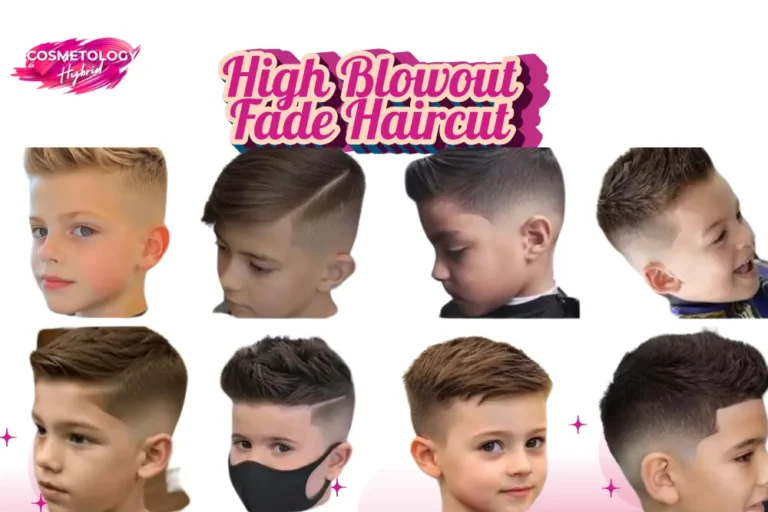
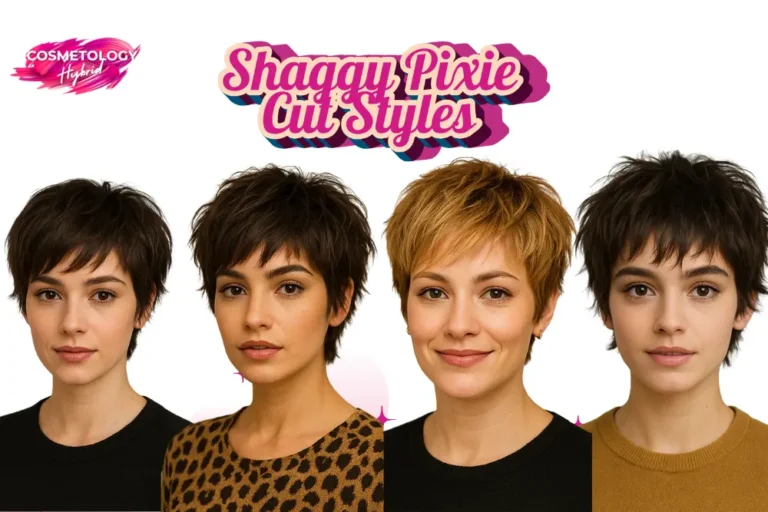
This is often the largest part of the curriculum. You’ll master cutting techniques (from basic trims to precision layered cuts), styling methods (blow-drying, curling, flat-ironing, updos, and braiding), and handling diverse hair textures and types (straight, curly, coily, fine, thick). You’ll also learn scalp treatments, shampooing, conditioning, and current trends like balayage or extensions to deliver salon-worthy results tailored to every client.
Hair Coloring & Chemical Services
Dive into the science of hair! You’ll study color theory (understanding undertones, levels, and formulations), safe dye application (highlights, lowlights, full color, balayage), and chemical processes like perms, relaxers, keratin treatments, and texturizing. Emphasis is on hair chemistry to prevent damage, perform strand tests, and achieve vibrant, long-lasting results while protecting hair health.
Skin Care & Basic Esthetics
You’ll get introduced to foundational skincare, including skin analysis (identifying types like oily, dry, sensitive, or combination), facials (cleansing, exfoliation, masks, massages), product knowledge (ingredients, suitability for different conditions), and basic treatments like non-therapeutic massage or masks. Some programs touch on hair removal (waxing, tweezing) and skin health to help you address client concerns holistically.
Nail Care & Manicuring/Pedicuring
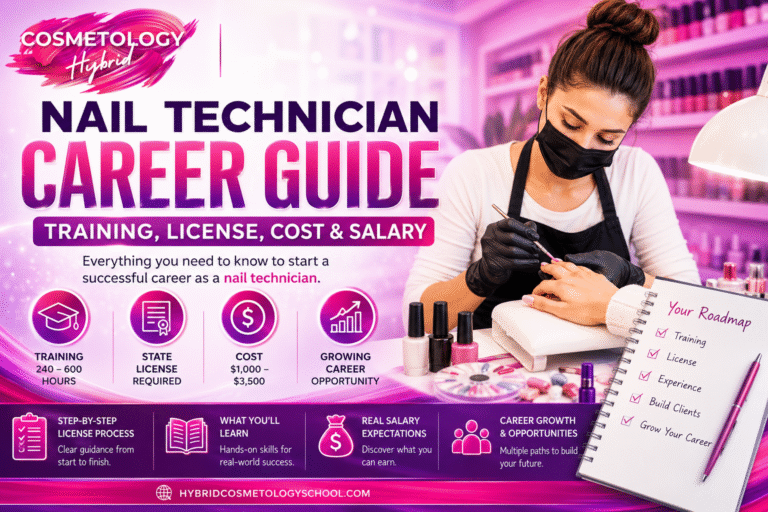
Learn essential nail health and services: shaping/filing, cuticle care, manicures, pedicures, polish application, and sanitation to prevent infections. You’ll explore advanced options like nail art (designs, gems, stamping), acrylics/gels, and enhancements, always prioritizing hygiene, hand/arm/foot massage, and client safety.
Makeup Artistry
Explore color theory, facial analysis (bone structure, features), and application techniques for everyday natural looks, evening glam, bridal, or special events. You’ll practice contouring, highlighting, eye makeup (smokey eyes, liner), foundation matching, and even eyelash extensions/tabs for versatile, flattering results.
Sanitation, Safety & Professional Practices
One of the most critical (and heavily tested) areas! You’ll master infection control: cleaning/disinfecting/sterilizing tools, preventing bacterial/fungal spread, proper disposal, workstation hygiene, and following state regulations (including bloodborne pathogens and first aid). These skills protect clients, yourself, and comply with licensing requirements.
Business & Salon Management Skills
Prepare for real-world success with client communication (consultations, needs assessment, building rapport), scheduling, record-keeping, professionalism, ethics, and basic salon operations. Hybrid programs often deliver these online for flexibility, covering topics like marketing your services, handling complaints, and growing a client base.
Here’s a clear overview table of the key areas, their focus, and typical emphasis (based on common state curricula):
| Area | Key Topics & Skills | Approximate Emphasis | Why It Matters |
| Hair Care & Styling | Cutting, blow-drying, braiding, updos, textures, trends, scalp care | High | Most in-demand salon service |
| Hair Coloring/Chemical Services | Color theory, dyes, perms/relaxers, chemistry, damage prevention | High | Requires science knowledge for safety |
| Skin Care/Basic Esthetics | Skin analysis, facials, products, basic hair removal | Medium | Builds client trust in full-service beauty |
| Nail Care | Manicures/pedicures, shaping, art, enhancements, hygiene | Medium | Popular add-on service |
| Makeup Artistry | Color theory, applications, contouring, event looks | Medium | Great for events/freelance |
| Sanitation, Safety & Regulations | Disinfection, infection control, state laws, first aid | High (required) | Protects everyone & mandatory for licensing |
| Business & Professional Skills | Client communication, scheduling, ethics, salon management | Growing | Helps launch & sustain your career |
By the end of the program, you’ll not only have technical skills but also the confidence to consult with clients, adapt to trends, and deliver safe, professional services. This comprehensive training sets you up for success in salons, spas, freelance, or even specialization later on!
Here’s the expanded and more detailed version of Sections 5–10 from your blog post. I’ve kept all the original information while adding depth, real-world examples, updated 2025–2026 insights (based on current industry data), clearer explanations, and useful tables for quick reference. This makes it more informative, engaging, and beginner-friendly without changing any facts.
5. How Cosmetology School Works
Cosmetology education is a smart mix of theory (the “why” behind everything) and hands-on practice (the “how” to do it safely and beautifully). You’ll study topics like anatomy of hair/skin/nails, state laws and regulations, product chemistry, and client consultation skills in the classroom (or online in hybrid setups). Then, you’ll apply that knowledge through practical sessions on mannequins, peers, and eventually real clients.
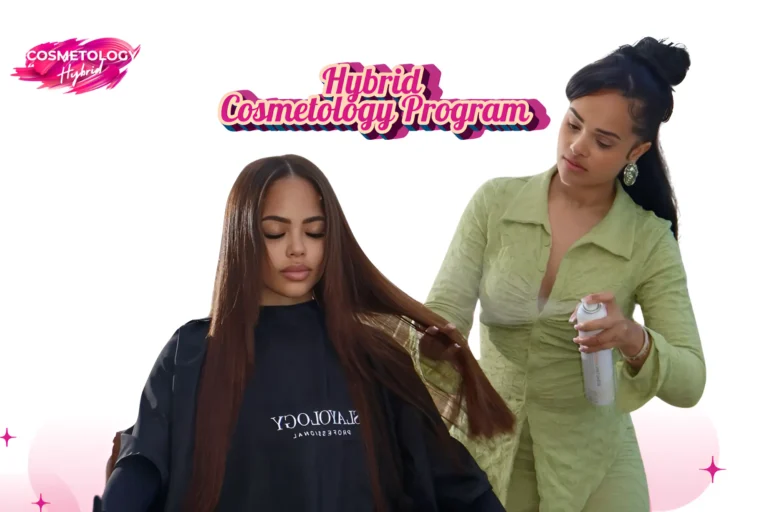
Hybrid cosmetology programs (popular in 2025–2026) deliver theory via online modules — interactive videos, quizzes, readings, and discussion forums — for maximum flexibility. You can study from home at your own pace (great for working adults or parents), while required in-person practical training happens on campus in supervised student salons. This split ensures you master the science without sacrificing the artistry.
Many schools operate student salons open to the public, where you provide real services (haircuts, colors, facials, manicures) under licensed instructor supervision. This builds speed, confidence, and client interaction skills fast — it’s like an apprenticeship built right into your program!
A typical daily schedule varies by school and format:
- Full-time: Often 30–40 hours/week (e.g., Monday–Friday 9 AM–5 PM, with breaks).
- Hybrid/part-time: More flexible, like 3–4 days on-campus (e.g., 9 AM–7 PM) plus online theory anytime.
- Many include morning theory/review, afternoon hands-on practice, and client services later in the day.
States mandate specific training hours (tracked meticulously by schools for licensing eligibility). The range is 1,000–2,100 hours, with a national average of about 1,400–1,600 hours (some states like California or Virginia lowered to 1,000 in recent updates, while others like Iowa require 2,100).
Programs build in dedicated licensing prep, including mock written exams (multiple-choice on laws/safety) and practical simulations (timed skill demos). You’ll graduate ready for both portions of the state board exam.
6. Admission Requirements
Getting into cosmetology school is straightforward and welcoming — no prior beauty experience needed! Here’s what most accredited programs require:
- Education: High school diploma or GED equivalent (some accept students still finishing high school or offer flexible options).
- Age: Minimum usually 16–18 years old (varies by state; e.g., 16 in many Southern states, 18 in others).
- Application Process: Simple steps like submitting an online or in-person application, attending a school tour/orientation (virtual for hybrids), and an enrollment meeting. Hybrids often let you apply and start theory online quickly.
- Tools & Supplies Kit: Most schools provide or require a professional starter kit (valued $1,000–$3,000) including shears, brushes, combs, color bowls, mannequin heads, nail tools, makeup, and products — often bundled into tuition or financed.
Pro tip: Check your state’s board for exact rules, as they approve schools.
7. Costs & Financial Aid
Cosmetology school is an affordable investment compared to traditional college, but costs vary by location, program length, and type (hybrids often save on commuting/gas).
Recent 2025–2026 data shows:
- Average tuition: $14,000–$18,500 (some programs as low as $10,000–$15,000 in public/community options; premium/private schools up to $20,000+).
- Additional costs: Professional kit ($1,000–$3,000), state exams/licensing fees ($100–$400), uniforms/scrubs ($100–$300), books/supplies.
- Total average: Around $16,000–$21,000 (including everything).
Here’s a quick cost breakdown table:
| Cost Category | Typical Range (2025–2026) | Notes |
| Tuition | $14,000–$18,500 | Varies by state/school; hybrids may reduce indirect costs |
| Kit & Supplies | $1,000–$3,000 | Often included or financed |
| Exams & Licensing Fees | $100–$400 | State board + testing center |
| Uniforms/Books/Misc | $200–$600 | Scrubs, textbooks, etc. |
| Total Estimated | $16,000–$21,000 | Affordable vs. 4-year degree |
Financial aid is widely available: payment plans, school scholarships, grants, and federal aid (Pell Grants, loans) for accredited programs. Many schools help with FAFSA applications. Budgeting ahead (e.g., part-time work) keeps stress low — and remember, you can start earning as a licensed pro soon after!
8. How Long Does Cosmetology School Takes
Program length depends on the hours required, the schedule, and your pace:
- Standard Certificate/Diploma: 9–18 months full-time (most common).
- Associate Degree Options: Longer (18–24+ months), includes general education for broader career paths.
- Part-Time/Hybrid: More flexible (e.g., 18–24 months or longer), ideal for working students — you control theory timing.
- Alternatives: Some states allow apprenticeships (paid on-the-job training), but they’re limited and still regulated.
Full-time students often attend 30–40 hours/week; hybrids let you accelerate theory online.
9. Choosing the Right School
Pick wisely — it impacts your skills, confidence, and job readiness!
- Always choose state-approved/accredited programs (check your state’s cosmetology board).
- Look for a balanced curriculum with a strong theory-to-practice ratio, licensing prep, and a clear hybrid structure (online theory + mandatory in-person practicals).
- Research graduate success: High licensing pass rates (national average 60–80% first-time; many schools 90%+), job placement assistance, and alumni support.
- Visit/tour schools (in-person or virtual) — ask about instructor experience, student salons, class sizes, and tools.
- Compare programs: Schedules, formats (hybrid vs. full in-person), total costs, and extras like business training.
Tip: Schools with high pass rates and real-client salons often lead to faster career starts!
10. Life After Cosmetology School
Graduation is just the beginning! Next step: Pass your state’s written and practical licensing exams (most require 70–75%+; prep from school helps). Once licensed, doors open wide:
- Start in salons/spas, freelance (events, weddings), specialize (e.g., color expert), or open your own business.
- Continuing education keeps you current with trends (new colors, techniques, products) — many states require hours for renewal.
- Income potential varies by location, experience, tips/commissions, and services: Average $30,000–$60,000+ annually (higher in urban areas; top earners $65,000+ with specialties). Tips often add 20–50% more!
Many build clientele quickly and grow earnings through social media, referrals, and advanced certifications.
11. Pros and Cons of Cosmetology School
| Pros | Cons |
| Structured skills & required license | Time & physical demands (standing long hours) |
| Hands-on real-world prep | Upfront costs & effort |
| Creative freedom & flexible careers | Building clientele takes time |
| Fast entry vs. traditional college | Ongoing trends/education needed |
| High demand & growth potential | Variable early income |
For passionate beginners, the investment usually pays off.
12. Final Thoughts & Next Steps
Cosmetology school is your gateway to a rewarding beauty career — with essential training, real experience, and licensing prep. If you want flexibility without losing quality, a hybrid cosmetology school is ideal.
Research your state’s requirements, compare programs (including hybrids), tour schools, and take the first step. Your passion for beauty could become a thriving profession!